To Sing and Dance: In the Present
Let us take you through some of the sights and sounds you would experience at a powwow held in Nimíipuu country. You can see a grand entry at the Looking Glass Powwow at Kamiah in August of 2001. You will then move to the Tutxinmepu Powwow, held on the University of Idaho campus in October of 2001, and sponsored by the Native American Student Association of the U of I. The University of Idaho is within the traditional territory of the Nimíipuu, ceded in the Treaty of 1863. Besides the types of dances and songs you see and hear on this page, for example, Prairie Chicken, Women’s Tradition and Owl dance, many other styles of dance and types of song would also be seen and heard, including Men’s Fancy and Grass. On this page, compare some of the songs you hear at the powwow with the Sam Morris songs provided above, for example, Prairie Chicken and Owl. You can also listen to this honor or chief song recently sung at the White Bird Memorial (Recorded by Antonio Smith, June 1999). You can also listen to this flag song sung at the Big Hole Memorial in Montana (Recorded by Antonio Smith, August 1999).
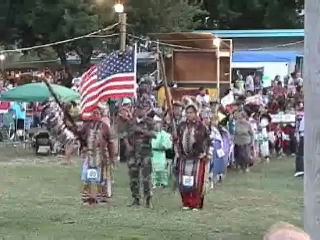
Looking Glass Powwow at Kamiah, August 2001 - Grand Entry. Notice some of the many band signs carried by dancers as they enter, signifying family affiliation.
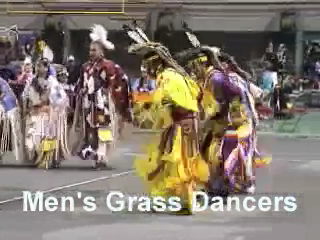
Tutxinmepu Powwow on the University of Idaho campus, October 2001 - Team Dancing with both Men's Grass and Women's Traditional Dancers.
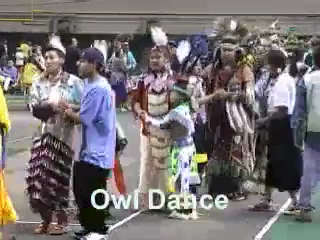
Tutxinmepu Powwow on the University of Idaho campus, October 2001 - Owl Dance.
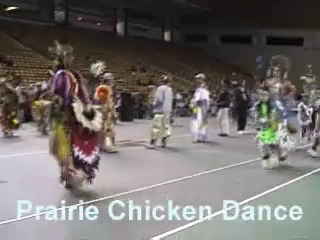
Tutxinmepu Powwow on the University of Idaho campus, October 2001 - Round Bustle or Prairie Chicken Dance.
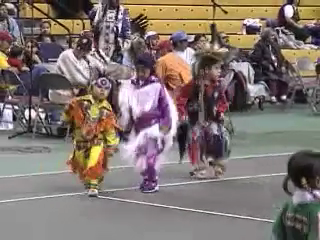
Tutxinmepu Powwow on the University of Idaho campus, October 2001 - For the Young.
Powwows are held throughout the year, and throughout Indian country. They celebrate and reaffirm identity in one’s particular tribe and family and in being an Indian. Powwows provide a public way to honor the elders, the veterans, and the children. For so many Nimíipuu, to sing and to dance is a deeply spiritual act, a form of prayer and way to give to the Creator. With the particular dance categories, honor takes place and friendly competition and contests are judged for prize money. Powwows are just plain enjoyable, providing an opportunity to renew friendships and to share in a laugh. All peoples, Indian and non-Indian alike, are welcomed and encouraged to share in this vital form of dance and song.
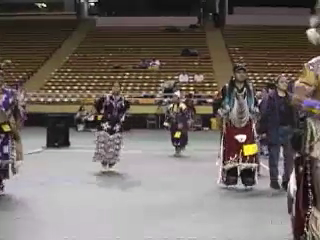
Tutxinmepu Powwow on the University of Idaho campus, October 2001 - Strips and Feathers: the Veteran and the Whip Woman.
Special recognition is always given to those who have served the country in the armed forces, from the opening flag ceremony, to honor dances for veterans, to this example on one’s regalia. The Whip Woman assists in coordinating and instructing more inexperienced dancers and children in proper powwow etiquette.
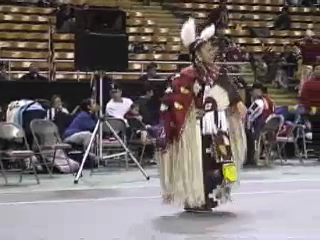
Tutxinmepu Powwow on the University of Idaho campus, October 2001 - Women's Traditional.
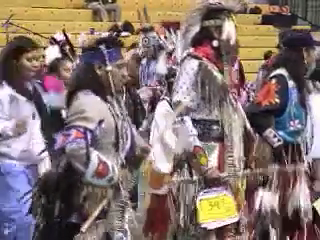
Tutxinmepu Powwow on the University of Idaho campus, October 2001 - Intertribal.
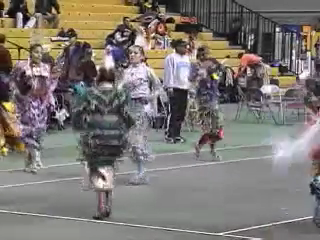
Tutxinmepu Powwow on the University of Idaho campus, October 2001 - Women's Jingle and Fancy Shawl Dance.
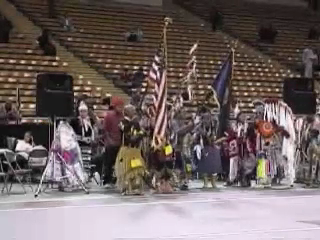
Tutxinmepu Powwow on the University of Idaho campus, October 2001 - Retiring the Colors.
Let us share a closer look at one of the Nimíipuu drums, the Redtail Singers.
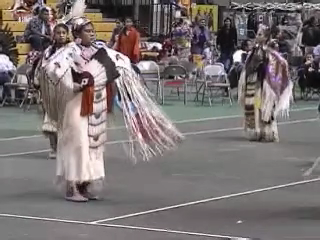
Redtail Singers at the Tutxinmepu Powwow on the University of Idaho campus, October 2001, with Women's Traditional Dancers
Continue your dancing by going to To Sing and Dance - In the Past, and to The Songs: the Powwow, in the Coeur d’Alene module.
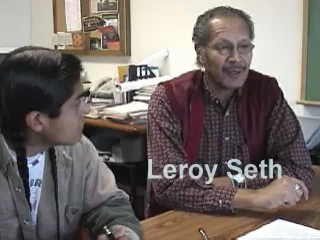
Leroy Seth on the Powwow. (Interviewed by Josiah Pinkham November 2001)
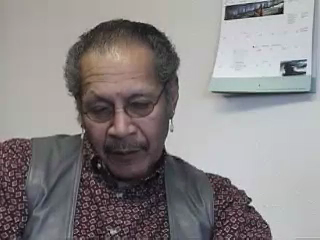
Leroy Seth on the Nez Perce National Anthem. (Interviewed by Josiah Pinkham February 2002)
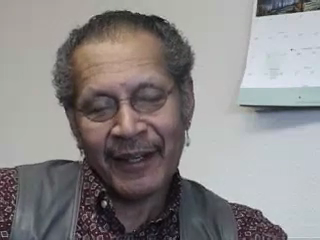
Leroy Seth on the "Duck and Dive" song. (Interviewed by Josiah Pinkham February 2002)
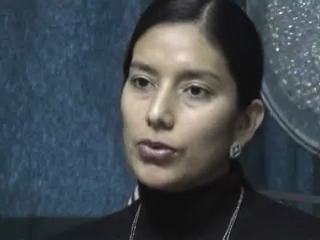
Angel Sobotta talks about her inspirations for dance. (Interviewed by Ann McCormack February 2002)
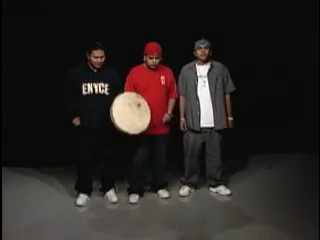
Three members of the Redtail Singers: Anthony Smith, D.J. Meninick, and J.J. Meninick (from left to right).
To learn more about the regalia made and worn during a powwow, go to Traditional Clothing Styles and Appearance and Contemporary Artists: Continuities
© Nez Perce Tribe 2002