


About
Sedimentation is a multimedia exploration of Glen Canyon’s entangled human and natural histories, traced through the sedimentary archive.
About Glen Canyon
Glen Canyon (called Tséyi, or deep in the rock in Navajo) sits just upstream from the Grand Canyon and straddles modern-day Arizona and Utah. Like the Grand Canyon, Glen Canyon formed around 6 million years ago as the silt-rich Colorado River downcut through 700 feet of the Colorado Plateau. Seven federally recognized Indigenous tribes have ancestral ties to Glen Canyon, including the Diné (Navajo), Hopi, Ute Mountain Ute, San Juan Southern Paiute, Paiute Indian Tribe of Utah, Kaibab Paiute, and Zuni. Glen Canyon is also home to 79 native plant species, 189 native bird species, 34 native mammal species, and 8 native fish species.
Since 1963, Glen Canyon has been drowned beneath Lake Powell, a man-made reservoir held back by the 700-foot tall Glen Canyon Dam. The damming of Glen Canyon destroyed vast swaths of critical wildlife habitat, inundated countless culturally vital sites, displaced thousands of Indigenous families from their homelands, and dispossessed tribal nations of their land and water rights. As a result, the Glen Canyon Dam has long drawn public criticism, even outrage, for the harms it has incited. “Surely,” wrote Edward Abbey, “no manmade structure in history has been hated so much by so many, for so long with such good reason as Glen Canyon Dam.”
In 2026, Lake Powell reached a record low: the reservoir has lost 77% of its water since 1983, and is quickly hurtling towards dead pool, which is the level at which the Glen Canyon Dam can no longer pass water downstream or generate electricity. The Bureau of Reclamation, who manages the dam, announced in March of 2026 that unless other measures are taken, dead pool is likely to occur before the end of the year. However, because the dam’s outlet pipes sit 237 feet above Glen Canyon’s floor, even at dead pool, Lake Powell would still hold water – almost 1.7 million acre feet of it, which is as much water at the entire state of Utah gets from the river each year. All of that water might soon be trapped behind the dam, evaporating under the hot desert sun, while people and wildlife downstream are left dry – and much of Glen Canyon is left drowned.
As Colorado River Basin residents face an increasingly precarious future, many have called for the Glen Canyon Dam to be decommissioned. Then, water would once again flow freely downstream, previously inundated land could be given back to local tribes, and Glen Canyon’s ecosystems could begin to restore themselves.
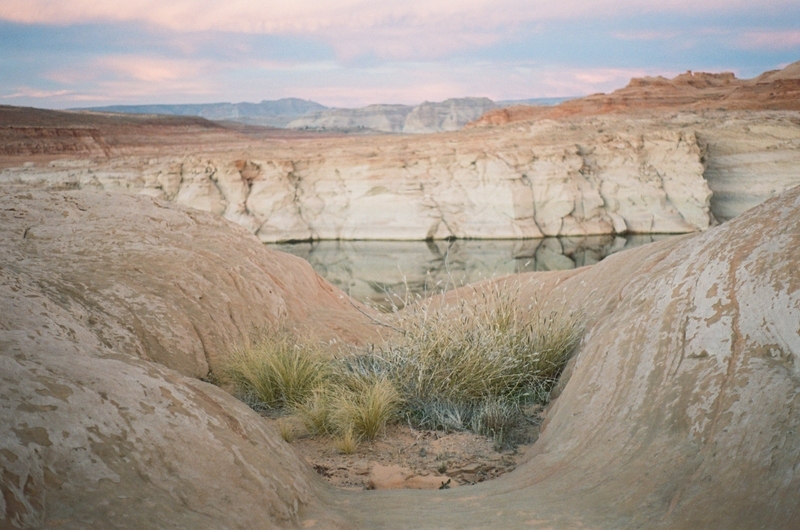
As a writer concerned about environmental justice, I am compelled to write about Glen Canyon because its ongoing mismanagement has critically impacted billions of human and nonhuman lives, and threatens to impact many more. I believe that understanding the mistakes and triumphs of the past can help inform better futures, and provide some direction during times of uncertainty.
But I am also interested in learning from the Canyon’s unfolding present, which does not forebode a future of uniform collapse and decline. Despite the extreme degradation incited by the dam, Glen Canyon’s ecosystems have quickly regrown as Lake Powell retreats, which gestures towards a future that might be laden with both loss and with opportunities for remediation.
About the Project
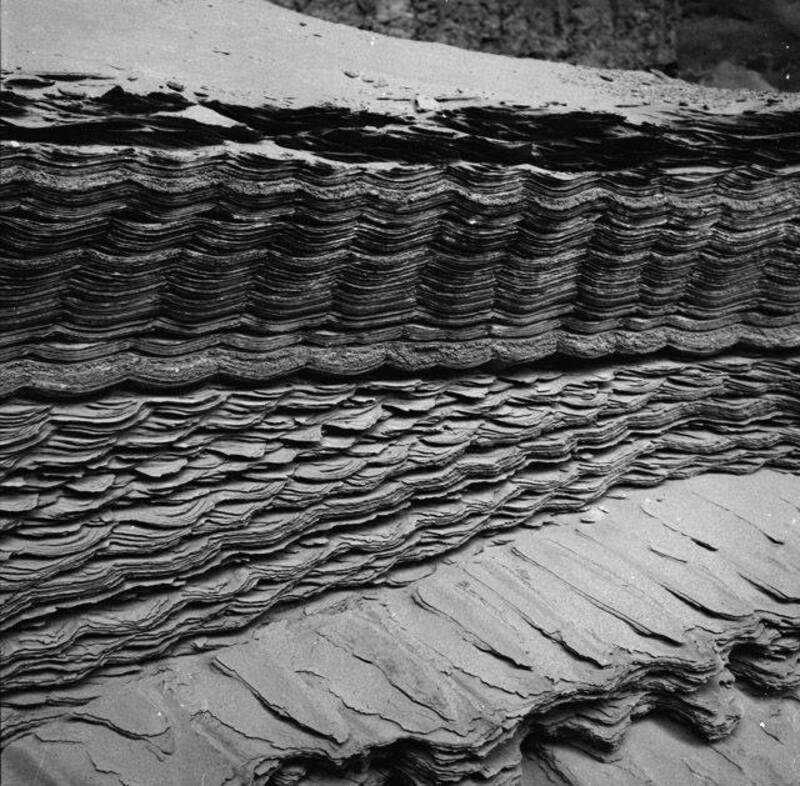
Sedimentation is a multimedia exploration of Glen Canyon’s entangled human and natural histories, traced through the sedimentary archive. It is also an exploration of narrative form, and is driven by the questions:
- What narrative formats are best suited for representing nonhuman histories?
- How can the nonlinearity, interconnection, and openness inherent in ecological stories be translated to written and visual media?
- Do landscapes store narratives about their own histories?
- If so, how do the arrangements of these stories differ than human-made narrative? What might we learn about narrative forms by writing alongside the earthly archives?
- And more particularly, what can sediment teach us about place, narrative, agency, relationality, and the contingencies of history?
Sedimentation is an attempt to respond to these queries. It draws on the affordances of digital storytelling to integrate visual material, hyperlinkages, user interactivity and writing.
Who We Are
Sedimentation was created by Hannah Green with support from Devin Becker and the University of Idaho’s Center for Digital Inquiry and Learning.
Hannah Green

Hannah Green is an English M.A. student at the University of Idaho. Before beginning her graduate studies, Hannah lived and worked along the Colorado River corridor as a crew leader with the Arizona Conservation Corps. Her interest in Glen Canyon began with a visit to Lake Powell, an experience that was both viscerally disturbing and question-provoking. What stories, she wanted to know, lay hidden beneath the lake’s glossy surface? As the lake recedes, how are these histories reemerging to shape the present? And might Glen Canyon’s past offer some guidance about how to adapt to an increasingly precarious future?
Sedimentation is her master’s thesis project.
Devin Becker

Devin Becker is the Associate Dean for Research and Instruction at the University of Idaho Library, where he also co-directs the Center for Digital Inquiry and Learning (CDIL) and oversees the development of the digital exhibit frameworks CollectionBuilder, Oral History as Data, and Digital Dramaturgy.
Devin helped design and code the website in and through conversations with Hannah over the course her fellowship.
Thanks also to: Dr. Jennifer Ladino, Dr. Erin James, Dr. Aly Kreikemeier, and Chris Lamb, all of whom have nurtured, guided, and supported this project from start to finish.
About the Collection
The vast majority of archival images for this project come from the Colorado Plateau Digital Collection, which is housed at Northern Arizona University’s Cline Library. The collection features nearly 60,000 digitized items, and Sedimentation owes its existence to the archivists, photographers, and stewards who worked to make this material accessible.
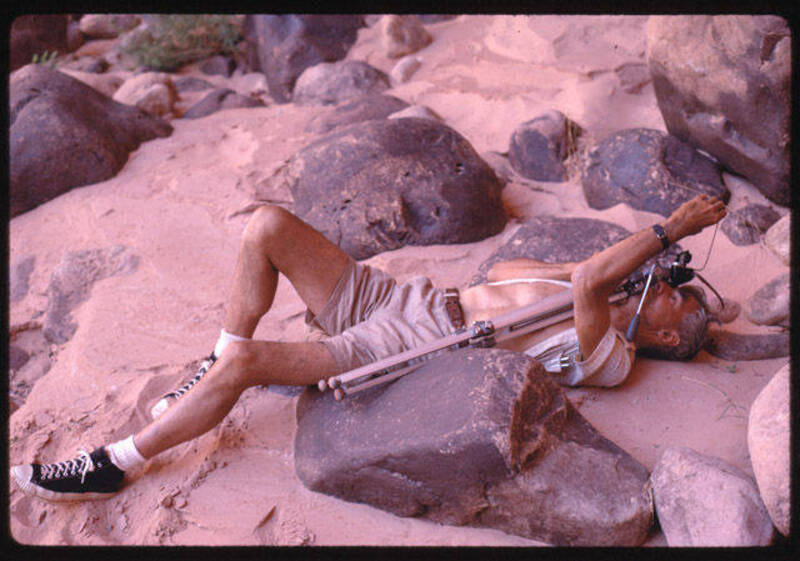
Sedimentation is particularly inspired by the photography of Tad Nichols (1911-2000), a river runner and filmmaker who made over thirty journeys through Glen Canyon by boat. Tad took over 4,000 photographs of Glen Canyon, leaving us with a meticulous and loving record of the Canyon before it was subsumed by Lake Powell.
Other photographs were taken by Hannah Green, by U.S. Government agencies, or are archived at the Huntington Library in San Marino, California, and the University of Utah Library.
Want to Take Action?
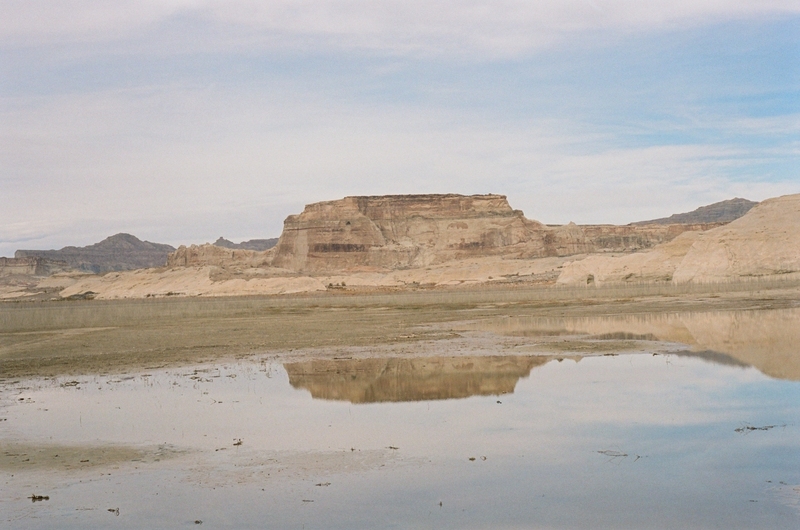
Since John Wesley Powell’s first trip down the Colorado River in 1869, the American Government has treated Glen Canyon like a resource free for the taking. But Glen Canyon is not a resource, nor was it ever free to take: Glen Canyon is a vibrant ecosystem, and it has nourished both Indigenous Nations and multispecies communities since time immemorial.
Policies and infrastructures set upon extraction have unfortunately resulted in Glen Canyon’s drowning and the displacement of countless people, plants, and animals from their ancestral land. Remediation means undoing policies that continue to treat the land like a resource, and it means doing everything possible to right and repair past harm.
If you’d like to contribute to these efforts, you can:
Donate to DigDeep by the Navajo Water Project
Although Lake Powell is on ancestral Navajo Land, 30% of Navajo Nation families live without running water. The Navajo Water Project is an Indigenous-led organization on a mission to get clean, running water to more Navajo homes. Consider donating to support their work.
Donate to or get involved with the Glen Canyon Institute
The Glen Canyon Institute is a non-profit organization that advocates for Glen Canyon’s restoration through scientific research, public outreach, and legal action. You can donate to support their efforts, or join their email list to receive updates about opportunities for direct action.