


ATMOSPHERE
Wind Memories
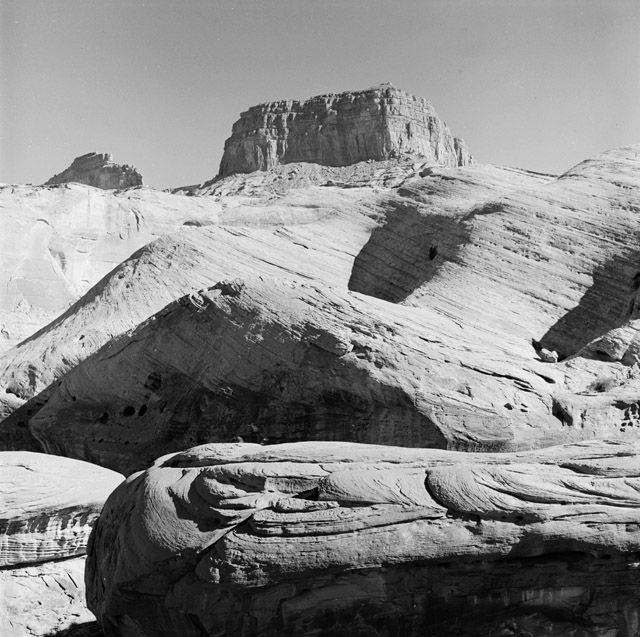
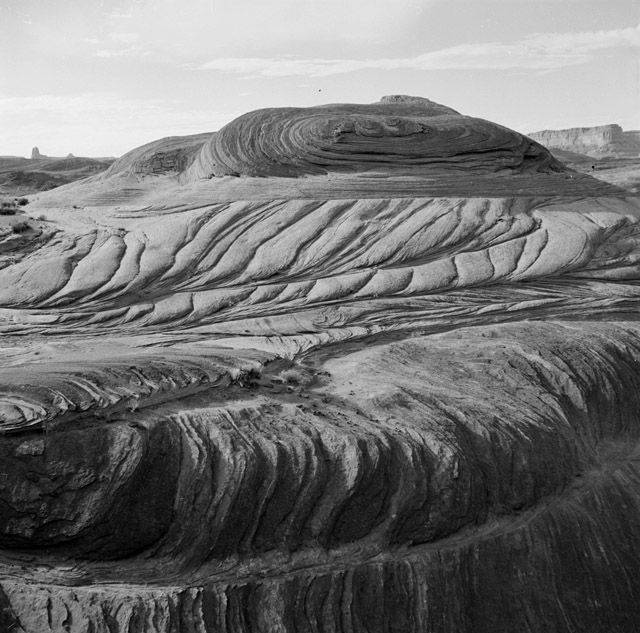
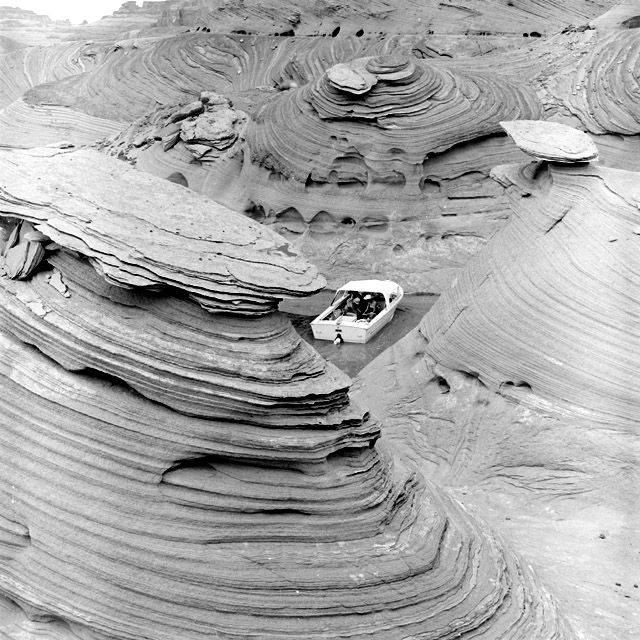
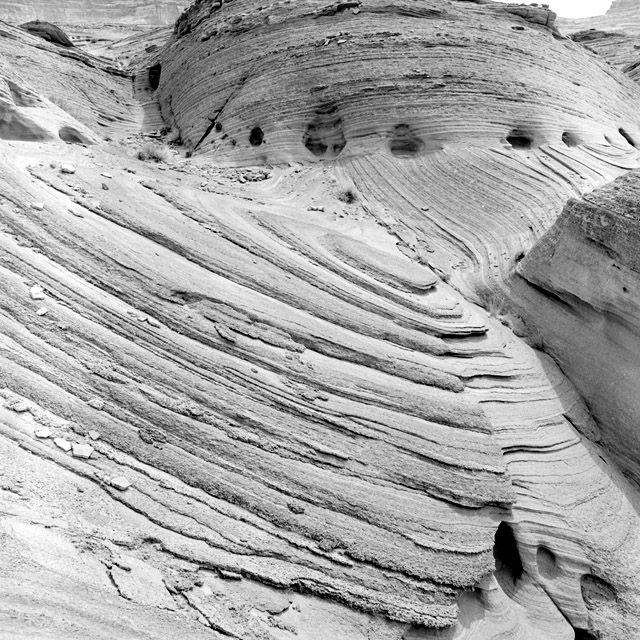
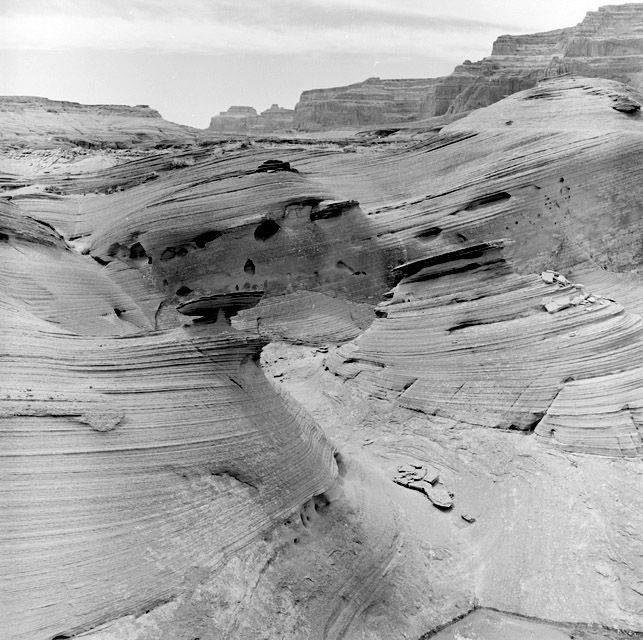
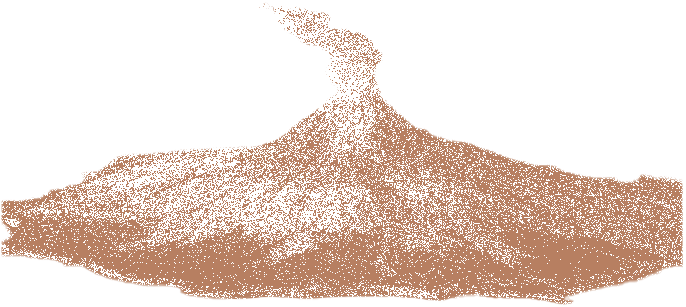
ABOVE GLEN CANYON’S rim, the land swells with domed mounds of rock. Their sides are deeply lacerated, but their edges are soft and swoop gently. To me, it looks as if scoops of ice cream have been dropped over the plateau, or as if a baker has patiently laminated slim rounds of cake and left them to droop and crumble under the hot sun. They reminisce of withered dunes fixed in place – which in fact, they are.
190 million years ago, during the Early Jurassic period, wind systems blew vast quantities of sand over the western continent. The sand piled into high dunes, and the winds whipped the dunes higher and steeper until the sand at the peaks met their angle of repose and tumbled down in thin avalanches to spill over the leeward slopes. Each avalanche spread a fresh coating over the dunes’ shoulders, and over time, these coatings stacked up like the layers of a cake. Later, under the weight of ensuing sand, each lamination was cemented in place, aided by cloying minerals.1
When I look at these photos, I am struck by the memories that the land holds, and the way it bares these memories so plainly.
It does not take a geologist to see what has happened here. When I showed these photographs to a poet friend and asked him to describe what he saw, he said he saw the wind. If I look long enough, I start to believe that I can feel the old winds, see the dunes spill over themselves, hear the swish of sand, although I am separated from all of this not only a thousand miles but also by 200 million years.
The dunes no longer shift, but I can clearly sense their motion. I think about the stretching millennia, the torrent of events through which these thin remainders of wind have stood, and it seems as if time has compressed, as if the past has risen up, as if the land is impressing a story of its ancient self – its lively motion, its patient world-making – on all who care to look.
Geologists have, however, helped me to translate a more detailed story about the sand’s origins. By reading the slope of the rock’s striations – which they call cross-beds – they can determine that in the era of the dunes, the prevailing winds blew in from the north-north west. And by looking closely at individual sand grains, geologists have also found that the particles are round in shape, evidence of a long and wearing journey, and are made from fine quartz and zircon, which discloses their origin: the Appalachian mountains of the east.2
Together, the sand’s shape and mineral identities have helped geologists reconstruct a story that connects Glen Canyon to places and systems far away and long since gone. They say that an ancient river once flowed from Appalachia across the continent, depositing debris at its northwestern mouth, from where the wind carried the debris southwest to form a sandsea.
I cannot see the shape of the sand grains, nor discern its mineral makeup. But by reading geologic histories, I have come to understand that material can carry an imprint of its origins and communicate the tracings of its movements. Scholars who study narrative say that a narrative occurs when “somebody tells someone else on some occasion and for some purpose that something happened in some world.” 3 When sand grains reveal to geologists their continental crossings and encounters with distant rivers, when they lay down in such a way that they tell my friend about the wind, I wonder: is this a narrative?
Sand Grains
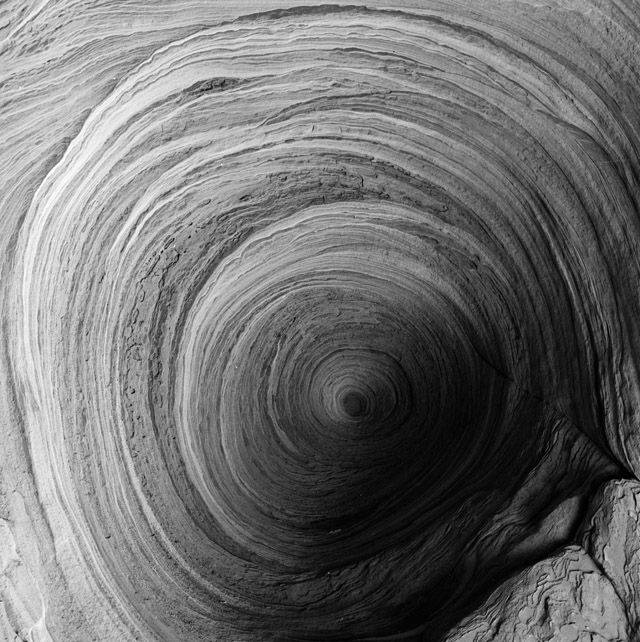
AS I COME across closer pictures of sandstone, I begin to see the texture of its grain, and I think about the multitude of histories collected in Glen Canyon’s old dunes. If sand and rock tell a story, it is one swirled with other places, strung with webs of countless interactions, brought together by the wind. There is an odd trick of scales at play here: the more closely I home in on a single grain of sand, the less I see sand, and the more I see mountains, rivers, and wind.
This narrative structure is unfamiliar to me. It does not line up with the narratives I know, in which a singular character – almost always human – marches through time, individuating as they brush against actors and places outside of themselves. By the time I reach the end of most stories, each character has become contained, made distinct against their settings and their relations. But no matter how hard I try to isolate the story of a single sand grain, I cannot parse the grain from the rains, winds, animal, or plant root that cut it from the slopes of the Appalachians. Nor can I detach this story from the river that ferried it west, or from the windy currents generated by the ebbs and surges of the sun’s heat. As I get flung out across wider and wider reaches of space, I can no longer pinpoint where the agency behind this story lies: with sand, with river, with mountain, with animal, with plant, with wind, or with sun?
Twin Warriors
FOR THE HOPI people, the slashes in the Plateau’s dunes hold the story of the living world’s transformation from flat mudsea to a terrain contoured by canyons, mountains, and hills. Two warrior twins, Pokanghoya and Polongahoya emerged from the Lower World of the spirits in order to mold the earth of the Upper World. When the twins arrived to the Upper World, Pokanghoya declared that “Everything has a sameness. Something needs to be done,” to which his brother replied “yes…The ground is soft. It is nothing but mud.” 4 The brothers gathered up this mud and heaped it into mounds and mountains, buttes and spires. When they had finished, they began a game of nahoydadatsia, chasing a buckskin ball over the earth with sticks. As the brothers ran, they hurled lightning arrows at the land and scored it with their sticks. The soft mud turned hard beneath their footsteps.
Crossed Tracks
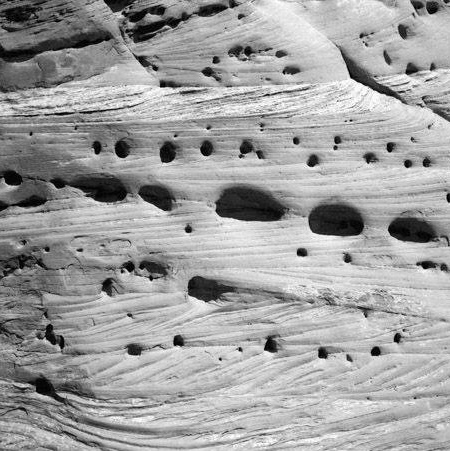
LIKE MY POET friend, when I look at photographs of Glen Canyon’s sandstone hills, I find it easy to see the trackings of the wind.
But my eye is also drawn to the caverns pocked across their wind-cut furrows, markings I find more difficult to decipher. Yet, they are familiar. I had seen caverns just like these smattering the walls of Labyrinth Canyon – a few hundred miles upriver from Glen Canyon – while on a canoe trip with a friend one August.
For five days, we paddled by thousands of honeycombed hollows and wondered what they were. Unable to consult the internet, we told each other stories about fairy cities dug out of the cliff faces with tiny fairy hands and rock-blasting magic. They lived there, we said, to hide from the desert sun, wind, and rain. And also from us, which explained why we hadn’t seen any.
We were wrong, of course, but our instincts that the caverns marked traces of invisible life turned out to be right.
Microbial communities proliferate in sandstone, eating holes out of the rock as they metabolize sediment. This work is not performed alone, though: microbes might etch a only small indentation in the rock before rain and wind take over and scoop the hollows deeper. Pools of water collect in hollow bottoms, and in them, microbes flourish, devour more sediment, and burrow deeper. 5
The wind, I have learned, works with many collaborators to shape Glen Canyon.
Níłch’i
DINÉ WORLDVIEWS UNDERSTAND that all of nature is suffused with níłch’i, which translates roughly into “Holy Wind”. For the Diné, níłch’i “serves as the means of communication between all elements of the living world” and gives “life, thought, speech, and the power of motion to all living things,” as philosopher Viola Cordova puts it. Níłch’i, in other words, is the force that animates life, and all life is a manifestation of níłch’i. Humans are “vortices” within níłch’i, as are all of the other “‘things’ of the world.” 6
One Diné elder7 explains that the traces of níłch’i can be seen within the swirls on our fingertips and toes, and in the coils of our ears and hair:
There are whorls here at the tips of our fingers. Winds stick out here. It is the same way on the toes of our feet, and Winds exist on us here where soft spots are, where there are spirals. At the tops of our heads some children have two spirals, some have only one, you see.
I hold my fingertips up close to my desk lamp and see the same whorled patterns that mark Glen Canyon’s dunes.
Formations
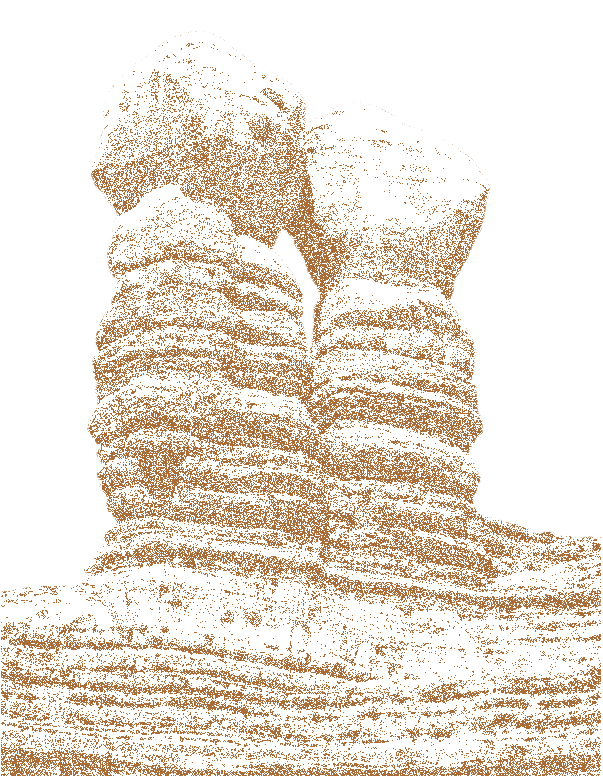
I SPENT THE summer of 2025 in Northern Arizona University’s digital collections, clicking through photographs of Glen Canyon from my desk in Idaho. I was in the early stages of my thesis work, and I had become intrigued by the idea that sediment was an under-represented character in Glen Canyon’s history, a kind of unseen agential force in the ecosystem. I had found this agency difficult, even impossible, to represent in writing: if I wanted to capture sediment in its vastness, its multitude of formations, its snarlings across space and time, I needed photographs, animations, and a way to arrange my narrative so that it could disperse, tangle, and swirl, like sediment.
I submitted a proposal to the University of Idaho’s Center for Digital Inquiry and Learning (CDIL), hoping they could help me present a multimedia narrative of sediment in a digital format. As I moved along in my research, however, I found that sediment’s agency was inextricably wrapped up in a variety of other systems; I could not talk about sediment without talking about its associations with wind, water, animals, and humans.
I also began to question whether it was responsible, or even correct to portray sediment as the primary agency in Glen Canyon’s ecosystem. Wasn’t this the same narrow approach taken by the human-centered histories I was attempting to counter? Didn’t these histories also make the case that the canyon was ruled by one actor while sidelining others? Had I just swapped one main character for another, when in fact, as sediment and its interactions had repeatedly showed me, Glen Canyon’s history is co-written by the ensemble of its sediment, wind, water, animals, and humans?
When I began my summer fellowship with the CDIL, they explained to me that their platform was designed to exhibit archival collections, and they trained me on some preliminary archival research methods. I first looked for photographs that demonstrated the sedimentary agency I was trying to convey. But as I spent more and more time with the photographs, I began to realize that I was looking at an archive within an archive. In nearly every photograph, sediment was imprinted with both human and non-human histories, crossed with the tracks and tracings of water, wind, animals, and people.
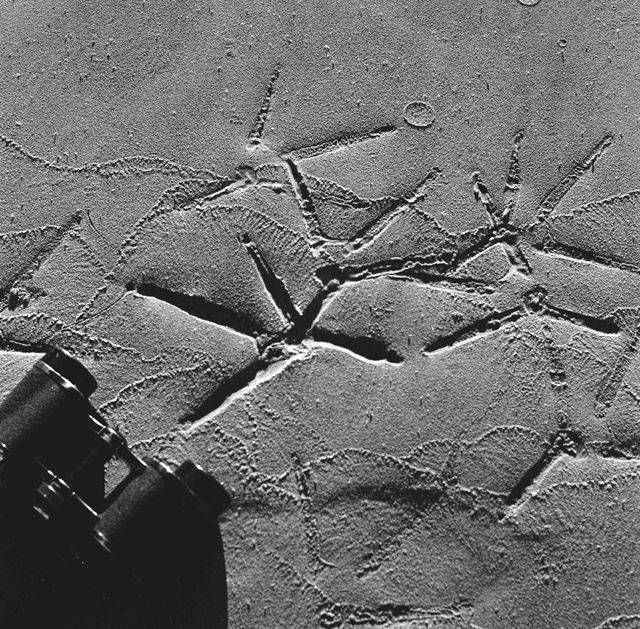
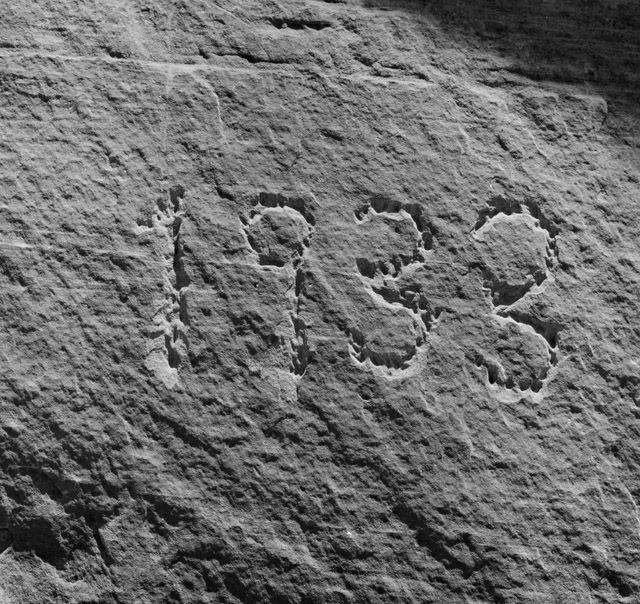
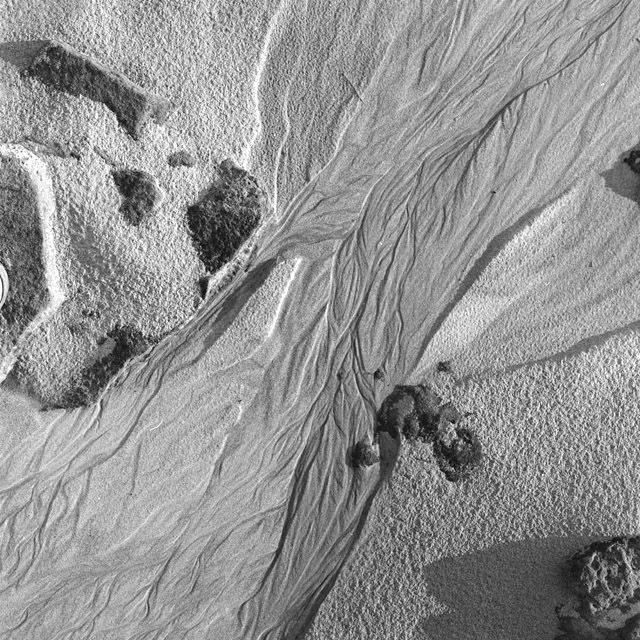
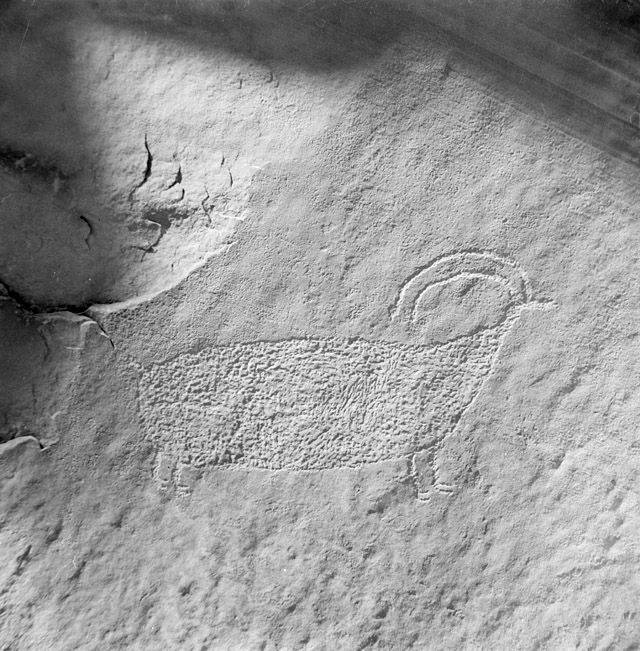
I shifted my focus. I started to approach the archive with the question: what can sediment tell me about the history of Glen Canyon? Most photographs of Glen Canyon feature sediment in some formation, of course; the terrain is composed almost entirely by sedimentary strata, rock fragments, and sandy beaches. I decided instead to pause on photographs in which I sensed there might be some kind of underlying story. I looked for markings, scratches, stains, or surprising formations – anything that seemed to glint with a lost presence. This was perhaps a methodologically vague approach, perhaps, but it worked. If I spent long enough digging – through written histories, geologic reports, ecology studies – the photographs would usually turn up some kind of story.
I found myself moving through my research like sediment moves through the river. Each image pulled me into distinct eddies of the canyon’s history; now I was reading about the inland seas of the Cretaceous period, now about the Conquistadors and their labored river crossings, now about Hopi irrigation methods, now placer mining, now the Cretaceous sea again. I drifted along what seemed like random and fractaling currents, recirculated around the same histories over and over again, discovered old stories resurfacing around the edges of new ones. Microbes would appear while I was reading about petroglyphs. Jurassic winds rustled in the margins of government proclamations. I grabbed each fragment and heaped them into a spreadsheet which began to resemble a jumbled stratigraphy of historical scraps.
I did not know how I would unravel this tangled muddle, but I knew that each story mattered, and mattered enough to impress itself into the canyon’s sediment.
Wonder
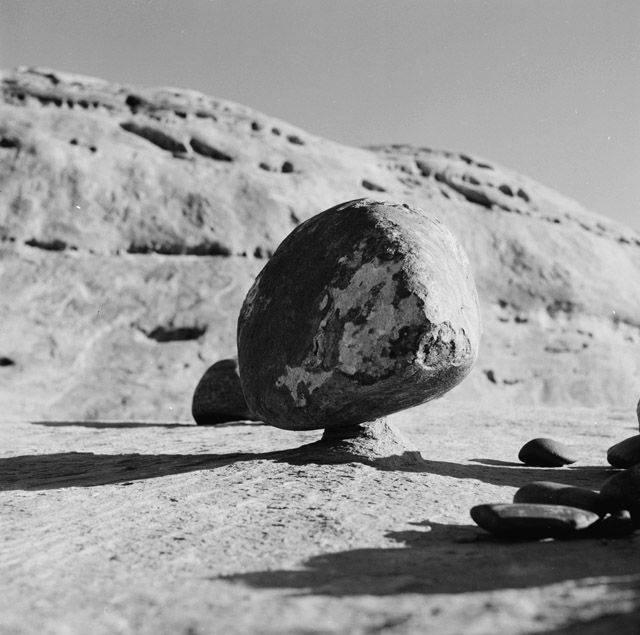
WHEN I SAW photograph number 25, a rock in the vague shape of an animal trudging up a hill, at first, I did not want to know its story. I did not want to find an explanation, spelled out in unambiguous scientific terms, that would uncover how a rock could come to take such a life-like shape. I wanted to believe for an irrational moment that this rock exhibited something verging on mythical animacy – I wanted to remain in wonder.
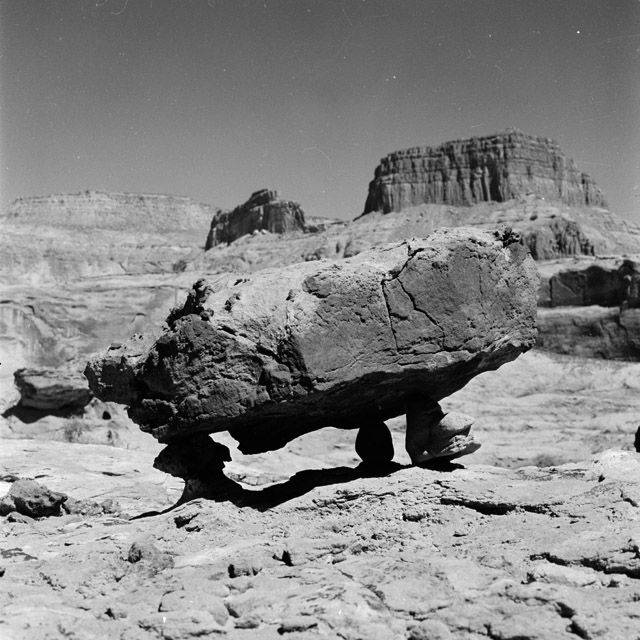
Instead, I searched the photograph’s title, “Balanced Rocks,” and found that balanced rocks are formed as when the wind plucks loose sand off the ground and blasts it against a boulder, eating away the rock’s lower layers until only a narrow pedestal remains. I found that the formation of balanced rocks also depends on what kinds of material composes each layer of the rock: quartz particles stick closely together, and are more resistant to erosion, while sandstone made of feldspar and clay is loose, and crumbles easily away.8
Even after I learned how balanced rocks get formed, I cannot get past a feeling of wonder. I wonder at the cooperation between wind and sand, at their joint ability to sculpt such lively forms. I wonder too that even in its absence, in the spaces where it has blown away, sediment divulges its stories.
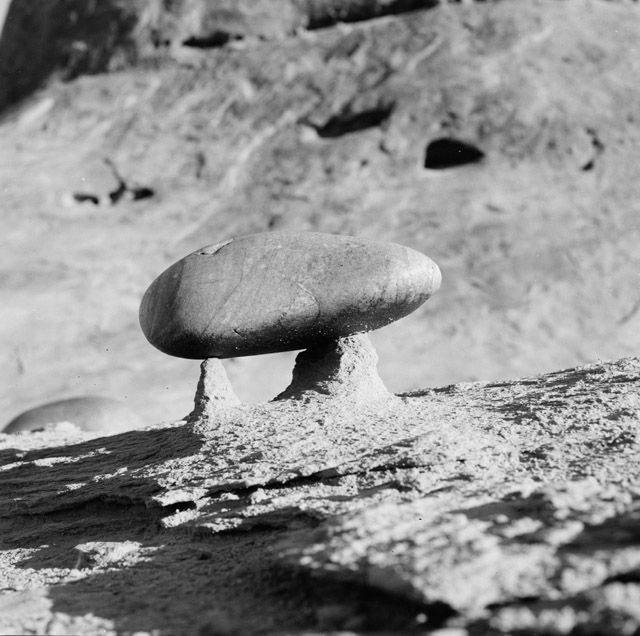
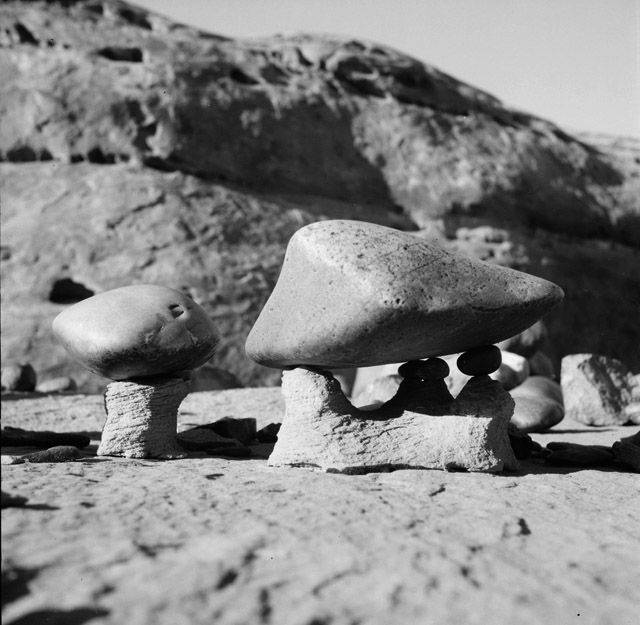
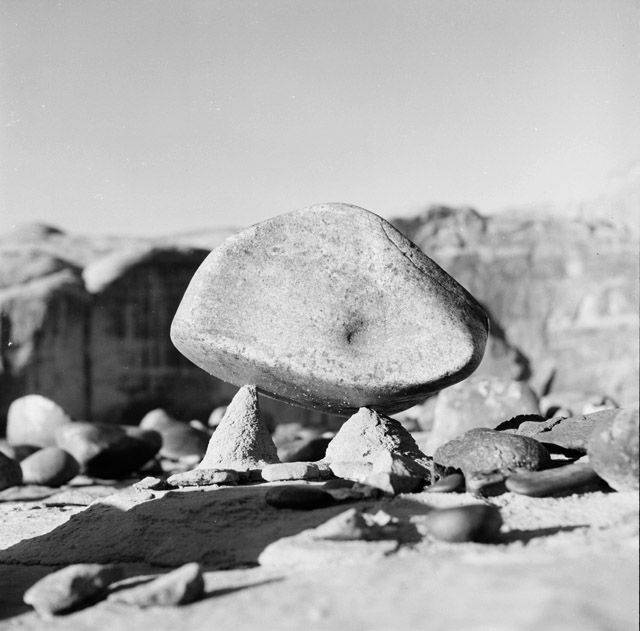
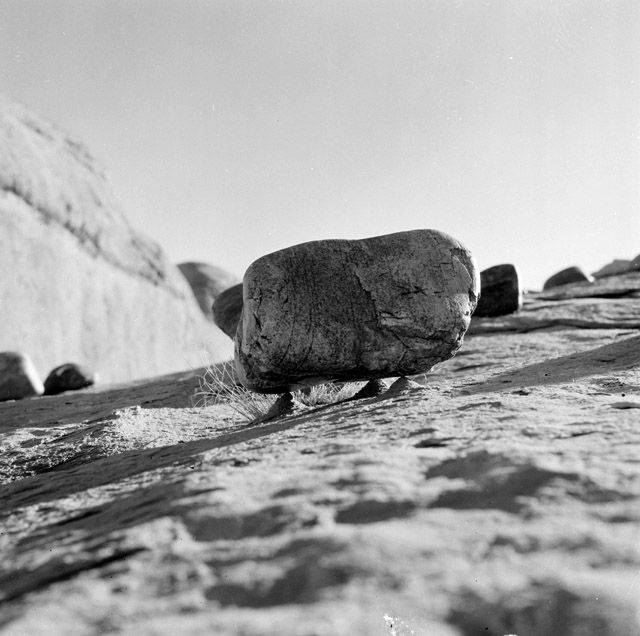
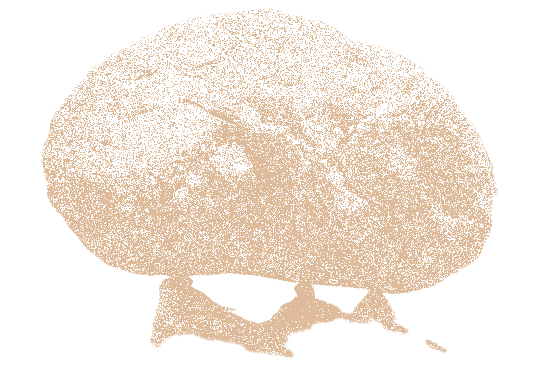
In the collection, I find more photographs of balanced rocks, and in all of them, the photographer, Tad Nichols, has placed the rocks at the center of the image, as if he is taking their portrait, as if he is trying to capture something essential about their presence, their strange forms. I sense wonder in the composition of these photographs, and think perhaps my wonder is not only mine, but also Tad’s.
Images of a Lost World
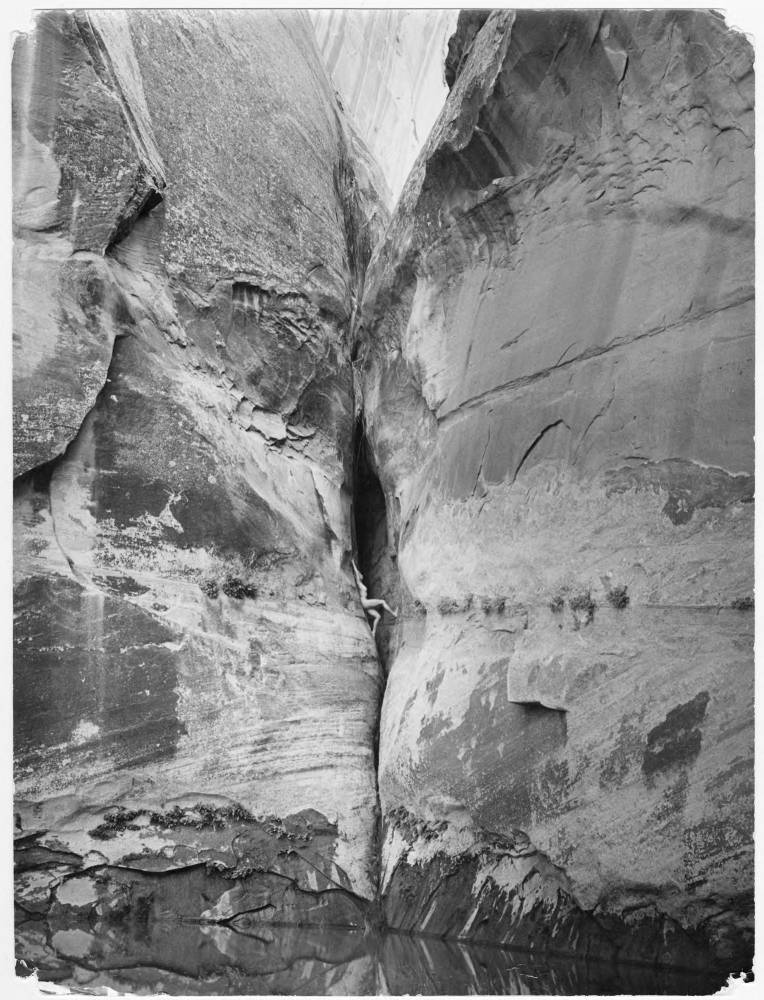
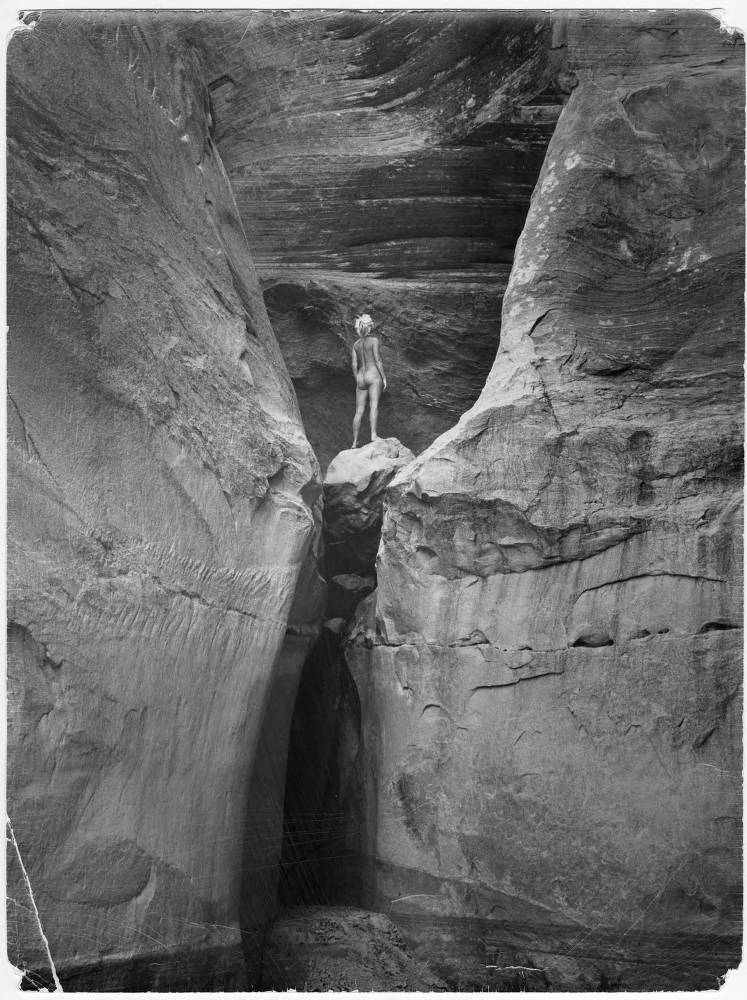
ON HIS TRIPS, Tad was frequently accompanied by his friends Frank Wright and Katie Lee, who documented the travels of “We Three” in her journal, which she later published under the title All My Rivers Are Gone. Katie’s journals are ebullient with a wonder that often times erupts in passion and grief.9
For reasons unexplained, we spoke in whispers as we walked beside a stream that seemed to flow stronger and gurgle louder than it had in times past. We waded between high sloping banks of maidenhair fern that had turned to bright turquoise–they bobbed under a seep and shivered in a light breeze. We skirted gentle sluices, stooping to feel them run through our fingers, awed by the patient force of moving water that ultimately wins. Dilation darkened our eyes, amazement heightened our whispers.
As our intimacy with the canyon grew, all we said and did threaded past in slow motion. For once, I was lagging behind, wrapped in a timeless aura–not at all certain that I hadn’t been standing right there two thousand, ten thousand years ago. The thought must have occurred to us all at the same time–that we were passing through a subterranean fairyland in a sparkling blue sea–but only Tad voiced it–‘feels like we’re walking under water’–before he realized he shouldn’t have. I lost it completely; went to my knees crying hysterically, screaming obscenities at the politicians and bureaucracies that had orchestrated the drowning of Eden.
When I read Katie’s journals, I cannot help but feel wonder for a landscape I will never see. Katie also writes sharply of loss, and I feel loss too, not only as I read her anguish for the drowned canyon, but as I move through the archive knowing much of what I see is now gone.
Currents of loss seem to run through Tad’s photographs as well. On the same trip that he took the balanced rock pictures, Tad noted in his journal that workers had already descended on the canyon, marking out the site of the future dam.10 Knowing that the canyon would soon be submerged beneath Lake Powell, was Tad driven to capture Glen Canyon’s wonder, or its impending loss? In his balanced rock pictures, wonder and loss seem to twine.
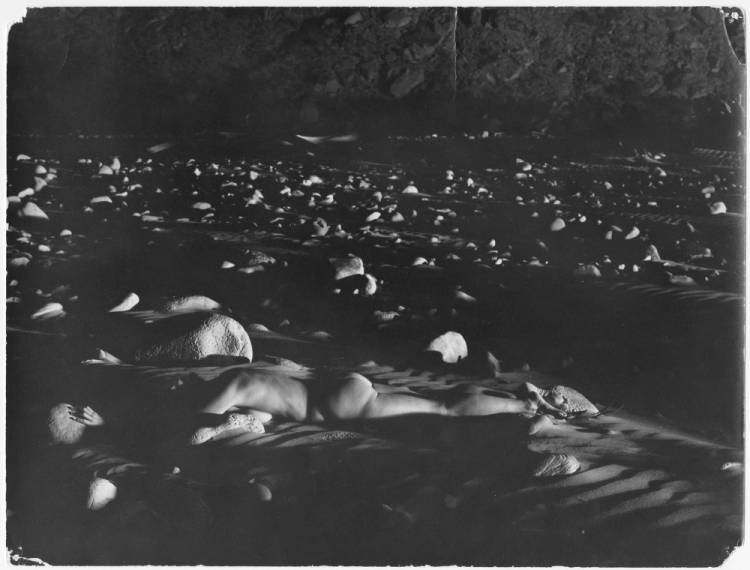
Laura Ogden posits in her book Loss and Wonder at the World’s End that loss and wonder commonly emerge as dual refrains in places touched by colonization and environmental change. Ogden thinks of loss not only as absence, but inundation. “These days,” she writes, “loss doesn’t seem like a dry empty desert. Instead, loss is soggy, a terrain of wet clothes and sodden dry wall”.11 Loss is the rising seas, the toxins accruing in the land and in our blood, the water creeping up behind a dam.
But the tides of loss, Ogden notes, tend to spread unevenly, taking on different shapes and intensities as loss flows through the various bodies that populate a lost terrain. My sense of loss is not the same as Tad’s or Katie’s, and their loss is not the same as that of the canyon’s native species or people, who, when the flood came, lost their home and means of living. “Losses,” she continues, “are rarely equally distributed.” 12
The patchwork of loss and wonder that emanates from Glen Canyon’s photographs, seeps out of its books, circles its ochre mesas and mineral-stained buttes, might be thought of as a kind of atmosphere that hovers over the landscape.
Geographer Ben Anderson says that affects, such as loss and wonder, tend to behave like bodies of air. Whereas emotions are the distinct personal manifestations of feelings about something particular, affects are the more diffuse valences that precede and produce emotions. Affective atmospheres envelop people and places in their auras, but they also shapeshift as they eddy around those people and places. Atmospheres might jump across space and time as they stick to books, art, photographs, or archives – but because they “are always being taken up and reworked in lived experience” they are “uncertain, disordered, shifting, and contingent” 13
When I look at Tad’s photographs or read Katie’s journals, I am drawn into a shared atmosphere of loss and wonder. But this atmosphere arrives to me already transformed, reworked through a circuitry of interluding histories, reworked again as it touches me. I see Tad’s photos and Katie’s writings through the filter of my own experiences or inexperiences with the canyon, and also through the haze of ensuing rhetorics of loss and wonder, which add new resonances to the canyon’s affective atmospheres.
Despite their airy indeterminacy, the atmospheres generated by loss and wonder matter for Glen Canyon. Like the winds that cut the canyon’s dunes and sculpted its balanced rocks, currents of loss and wonder also leave their marks on the landscape.
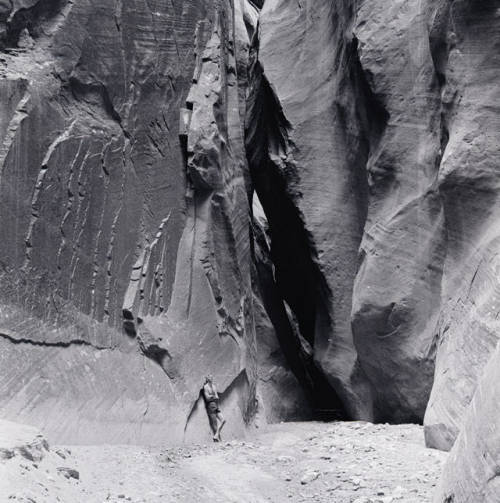
For Ogden, wonder does not lie outside of loss. Oftentimes, wonder instigates loss. Pointing to the word’s entanglement with Wunder-kammer, “those ‘curiosity cabinets’ filled with skulls, artifacts, rocks, fossils, and other specimens,” she defines wonder as the “impulse to know and acquire the world.” 14
I think here about the title of Katie’s book, her possessive “my” when referring to the river, and I think about the customary use of the words “capture” and “take” in photography. In this light, Tad’s photograph collection becomes a kind of Wunder-kammer, a curiosity cabinet filled with the rocks and artifacts of Glen Canyon. Katie and Tad did not want to take the canyon all for themselves, but they did want to maintain their access to it, an access that was predicated on the removal of Glen Canyon from Indigenous possession–oftentimes in the name of wonder.
Claiming Wonder
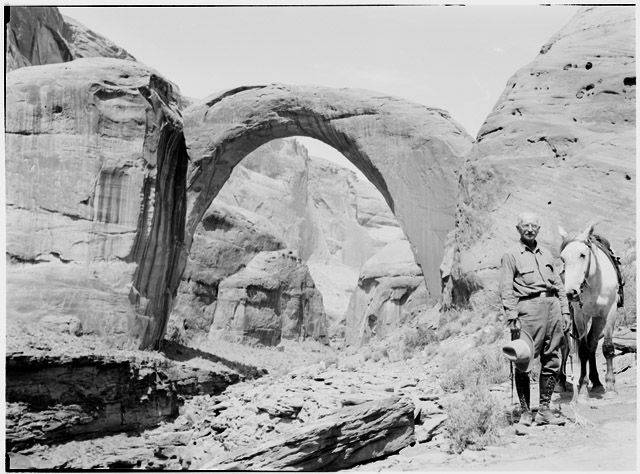
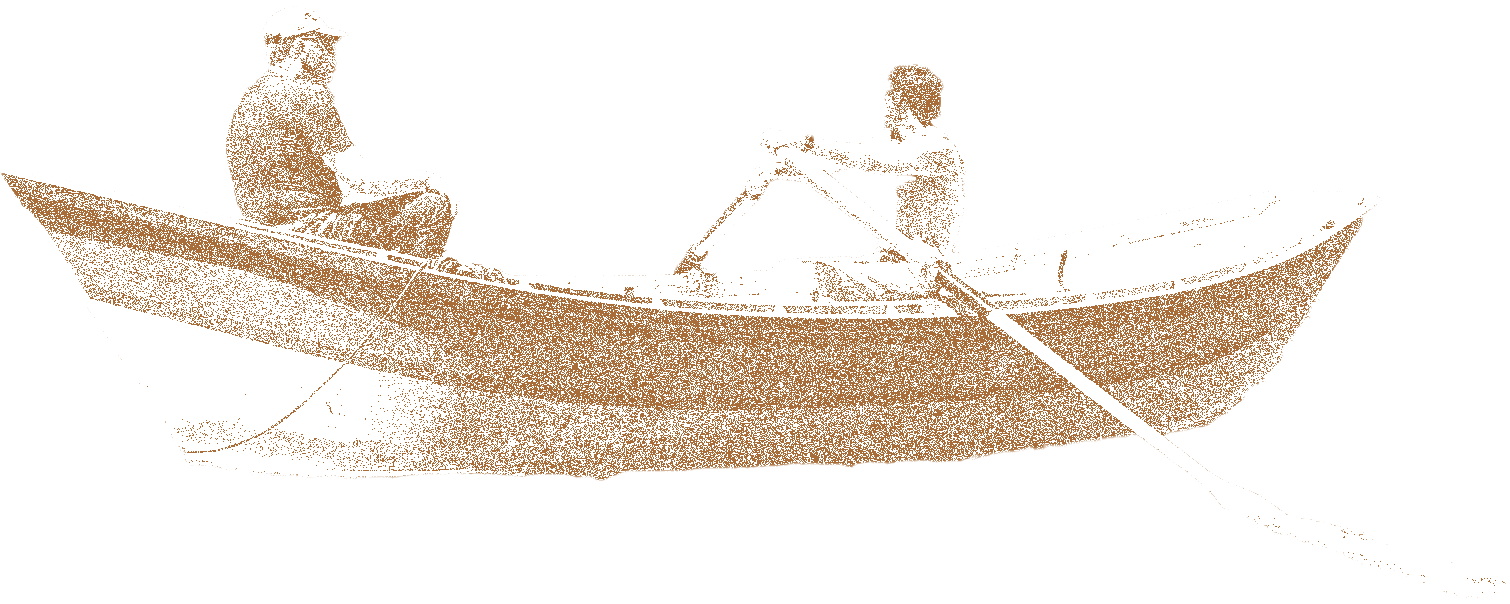
IN 1909, BYRON Cummings, an archaeologist at the University of Utah, and William Douglass, the general land surveyor for the USGS set out on a mission to find the rumored Rainbow Bridge, a large natural arch wedged into one of Glen Canyon’s side canyons. Led by Paiute guides Jim Mike and a father and son both named Noscha Begay, they found it, and quickly disseminated papers declaring their “discovery,” despite the fact that this discovery was only made possible by their native guides’ prior knowledge and connection with Rainbow Bridge. 15
One year later, President William Howard Taft removed Rainbow Bridge and the 160 acres surround it from Diné and Paiute lands and designated it a National Monument, writing in his proclamation that “[the] extraordinary natural bridge, having an arch which is in form and appearance much like a rainbow…[is] of great scientific interest as an example of eccentric stream erosion….[It] appears that the public interest would be promoted by reserving this bridge as a National Monument” 16
The attitude that the American people are entitled to wondrous landscapes is reflected in the words of journalist John Stewart MacClary, who visited Rainbow Bridge in the 1930s and subsequently published a magazine article which declared that “all classes were entitled to the privilege of viewing the natural wonder, since Uncle Sam had reserved it as property for the people” 17. Wonder, as MacClary illustrates, is a useful device for making and legitimizing territory claims.
Of course, neither Glen Canyon nor Rainbow Bridge were free for the taking. Rainbow Bridge, called Tsé’naa Na’ní’áhí by the Navajo, had long been a sacred site for the Puebloan, Navajo, Ute and Paiute peoples, and the land surrounding it their home. But as western rhetorics of wonder and curiosity about the bridge began to circulate, so did the colonial desire know the land, and then to acquire it, even if this meant removing original inhabitants from their ancestral home. Thus, settler wonder becomes a tool of Indigenous dispossession, and the tides of loss follow in wonder’s wake.
Economies of Wonder
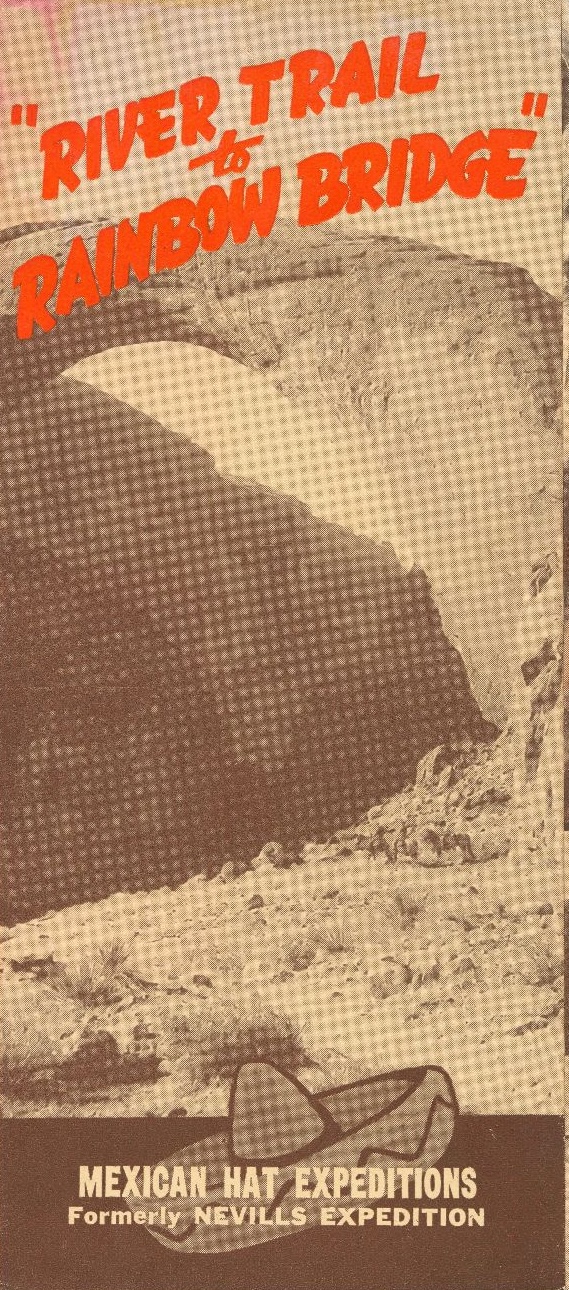
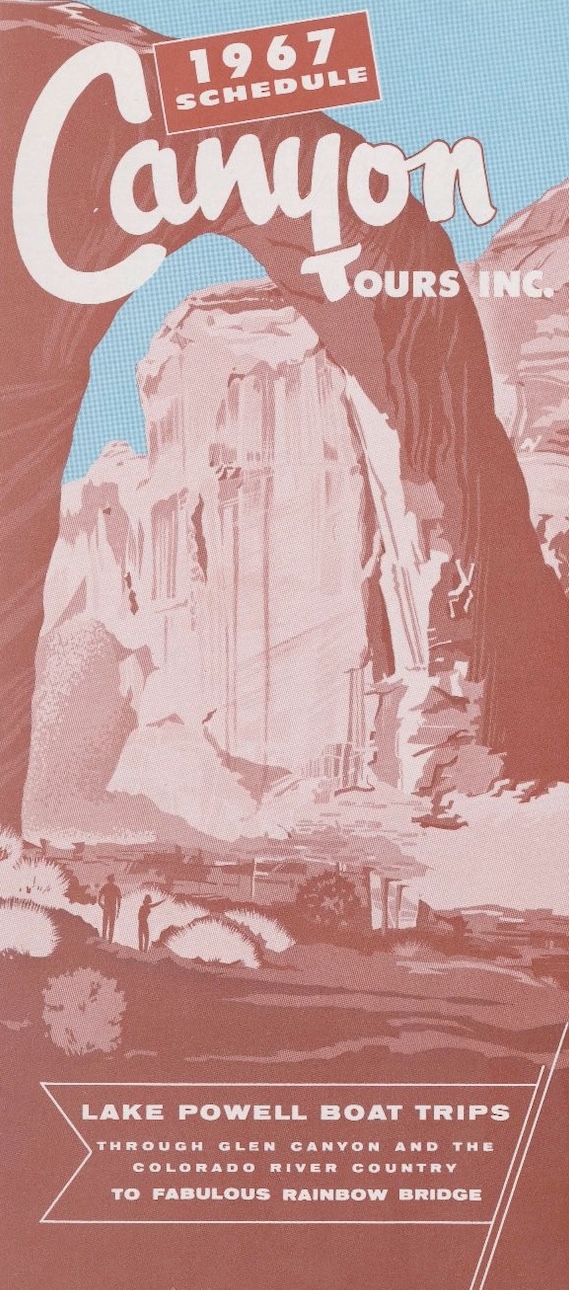
WONDER CONTINUED TO facilitate settler claims over Glen Canyon and its surrounding lands. Shortly after Cummings and Douglass broadcast the news about their “discovery” of Rainbow Bridge, tourists flocked to the region, seeking guides-for-hire who could lead them across the rugged country to see the site. Recognizing the economic opportunity to appease wonder-seeking travelers, S.I. and Hubert Richardson founded the Rainbow Natural Bridge Transportation Company, and more visitors flooded in. 18
A robust tourist economy began to collect around Glen Canyon, built on marketing the wonder of the landscape. And the tourist register at Rainbow Bridge is indeed rife with comments of wonder: “no person returned from the trip an atheist” wrote one tourist. “Nothing more perfectly attests the definite existence of a Supreme Being,” wrote another. 19 As testimonials the wondrous landscape spread, visitation grew, until, by the 1960s, tourism had replaced energy as the largest industry in the Four Corners region. Wonder had become the region’s most profitable commodity.
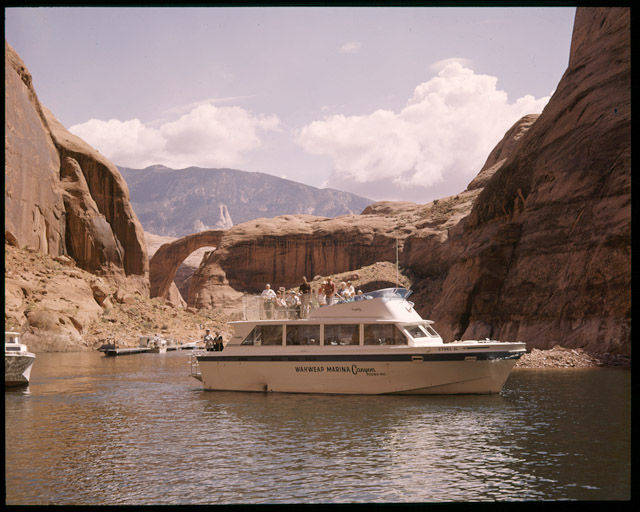
The atmosphere of wonder provoked by Rainbow Bridge still clings to the public imagination. Since the dam’s construction, tourists have been able to access the bridge by motorboat – a far easier journey than the rough horseback rides of the early 20th century. According to the National Park Service, as many as 300,000 people visit the bridge each year, most of them by boat.20 As boat rides run at $167 per passenger, the bridge alone generates a $50 million economy – and that’s without taking into account the additional money that bridge-seekers spend at nearby restaurants, hotels, and businesses, most of which are owned by corporate entities like Aramark and Del Webb. 21
Economies of wonder have allowed settlers to maintain their existence around the canyon, even after the collapse of the region’s gold and uranium industries threatened to uproot settler life. Shortly after the conclusion of the uranium boom of the 1950s, a reporter wrote that “the West is in for its greatest boom. This time it’s not the lure of gold, free land, or uranium. It’s a concerted quest for the most valuable of our natural resources: recreation” 22
Wonder thus became a limitlessly replenishable resource that promised to forever sustain settler life on the Colorado Plateau – that is, as long as the region’s water supply kept up.
Aridity
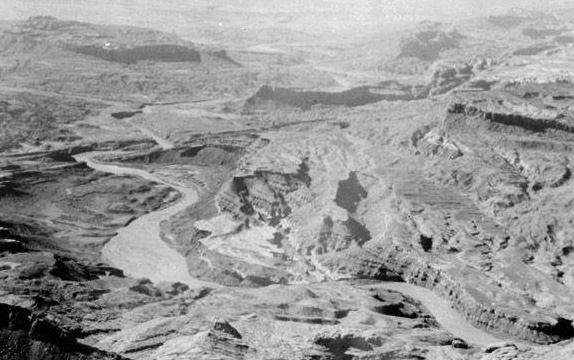
THE FEELING I remember most from my time on the Colorado Plateau is the crackling dryness that plucked at my skin, the film of dust that settled in my pores, in my the crevices of my bedding, in the fabric of my clothes. At night, the wind lifted up the rain fly of my tent, and in the morning, I would touch my face and find it slipped with fine grains. I spent most of my time outside, building trails for work, and had access to showers or sinks only when I returned to my aunt’s house every eight days, where I would watch a muddy stream pour down the bathtub drain. For much of my time in the field, I was within a few horizontal miles of the Colorado River, but it was tucked out of reach, 6,000 feet below me at the bottom of the Grand Canyon. To drink from, bathe in, or touch the Colorado River would have required hiking 24 miles roundtrip from camp.
Only once, in all those months, did I wash my dust off in the Colorado River. This was during a detour to Lee’s Ferry, one of the only places in Arizona where the river’s canyons dip and relent enough to allow access by road. I jumped in fully clothed, and rubbed the sand out from my ears and the webbing of my hands. Then I sat down on the beach to dry. By the time I got back in the truck, I was dusty again.
In the 19th century, the Mormons arrived to Colorado Plateau from the east, but they quickly found that the desert climate did not offer sufficient rain to nourish their farms, nor could they access the waters of the plateau’s stashed rivers without either settling in the canyons or constantly moving between plateau and river. But both options would have limited their ability to impose the kind of agricultural expansion needed to support their ambitions of establishing a large-scale Mormon state in the West. Instead, Mormons looked at the dry, dusty, landscape, the deep rivers, and decided they had been ordained by God to make “the desert bloom like a rose.” 23 So began an irrigation mania set on drawing the Colorado River up out of its canyons to water Mormon homes and fields, and so began a cascade of reclamation projects which would radically restructure life and land across the Colorado Plateau.
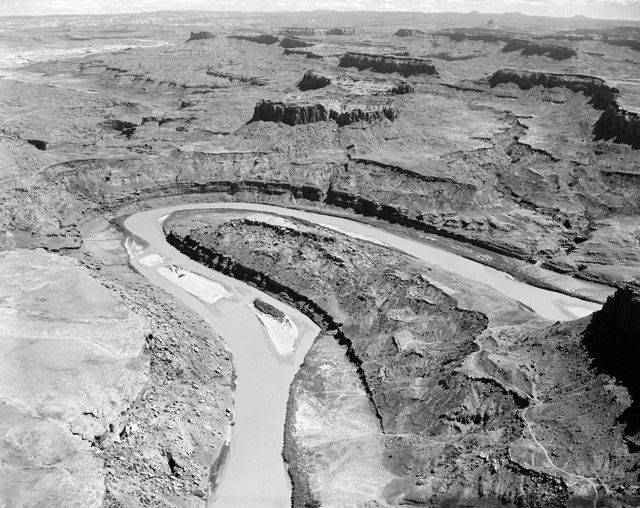
For historian Erika Marie Bsumek, colonization is often built upon rhetorics that first cast the land as somehow impoverished – too dry, too dusty, too icy, too wild – and therefore in need of transformation. By imagining the aridity of the Colorado Plateau as a problem in need of a solution, Mormon settlers justified their encroachment on land that had been occupied by – and supported – Indigenous communities for thousands of years. Bsumek notes, as does Jen Rose Smith,24 that settler logics are quick to extend judgments about inadequate landscapes to make racialized demarcations about the land’s native inhabitants, both of which serve the same aim: to legitimize the dispossession of Indigenous nations in the name of settler expansion.
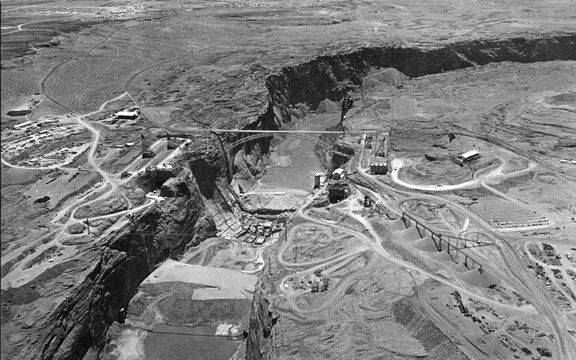
This logic was made overt in the 1930s, when the United States government declared that erosion along the Colorado River corridor was threatening to silt up to their newly-built Hoover Dam. Although the Colorado River has carried a heavy silt load for millions of years, the government blamed Diné sheepherders for overgrazing, and mandated the slaughter of half a million Diné sheep. The Livestock Reduction Act decimated Diné livelihoods, and it paved the way for the coercive treaties that would transfer Diné lands into the hands of the United States. On some of this land, the government built the Glen Canyon Dam.25
When I read these histories, I am reminded that stories have the power to recontour the land. Stories configure human experience and imagination, which in turn directs how humans treat the earth. There is nothing inherently inadequate about Glen Canyon’s arid atmosphere, about its dust; the land supported diverse modes of human life for thousands of years before Mormon arrivals. Notions that the land was deficient and in need of transformation were formulated in the Mormon imagination, borne out of a biblical story which conceived of desert spaces as geographically and spiritually barren.
As Jen Rose Smith outlines in her book Ice Geographies, assumptions about the superiority of temperate landscapes over dry deserts or icy tundras have proliferated through centuries of western thought. Smith calls such views “temperatively-normative,” and writes that temperate-normativity works to mark some landscapes as “non-generative” in “relation to a Western ideal of agriculture, which is meant to act as both a civilizational and government-making activity.” 26 She traces the lineage of temperatively-normative beliefs through the writings produced by Enlightenment-era philosophers, New Imperial explorers, and scientists, all of whom characterize non-temperate geographies as incongruent with “civilization,” and therefore inferior. These ideas, she notes, though old, continue to suffuse western attitudes towards dry and icy spaces today.
As Smith shows us, ideas and stories circulate through culture like invisible winds; they get carried across continents, through time, appearing and reappearing in locations far from their site of origin. As old stories gust into new geographies, they sweep up whatever fodder might fuel them forward, and they get remolded to fit the new landscape. Thus, when the currents of temperate normativity – which already imagined the dusty west as non-conducive for settler life – met the gales of the Dust Bowl, they gained newfound force.
I see it as no coincidence that the Livestock Reduction Act coincided with the Dust Bowl years. In the 1930s, stories of dust choking farmers, drowning crops, and smothering towns permeated the media. It would have taken little effort for proponents of the Reduction Act to harness the currents of dust-fear and drought-anxiety that were already whirling around the public consciousness, and thus justify an act that promised to prevent a similar fate on the Colorado Plateau, no matter how egregious the means.
Western stories altered the landscape in the Western imagination – by rendering dust an existential threat and aridity an inherent problem – but these imaginations also materially altered the landscape. The Mormons did not transform the desert into a garden of roses, nor did the Livestock Reduction Act put an end to dust or erosion. Years later, much of the Plateau is still dry and dusty, its water often out of reach. But the landscape is changed: dams have drawn the water up to canyon rims, pipes crisscross the plateau and deliver water to settler homes, homes which are built on ground that for millennia belonged to the Southern Ute, Southern Paiute, Diné, and Hopi Tribes.
I think back now to my work on those lands, the water from our office faucet that filled our camp jugs, the showers I took at my aunt’s house, the road that took me to the river, and I understand that my existence on the Plateau was a manifestation of the long and violent history that transfigured the Plateau’s social and physical landscape. This history was made possible by those biblical, philosophical, and rhetorical imaginations which came into contact with the Plateau’s deserts and dust, and transformed it.
Disruption
DINÉ KNOW HUMANS to be expressions of the Holy Wind níłch’i, as are canyons, rivers, cottonwood trees, lizards, and all other things in the world. But humans can still cause disruption by acting incorrectly. Thus, the human’s “first obligation,” philosopher Viola Cordova explains, “is to be aware of the consequences of his actions in the world and in relationship with other beings. The second (but equally important) obligation is to create, or add to, the beauty of the universe. He does this through adjusting his behaviour to harmonize with his surroundings and he does this also through the creation of beauty through ritual, song, and artistic objects. The deliberate creation of ugliness or introduction of disorderly elements is a disruption of the universe.” 27
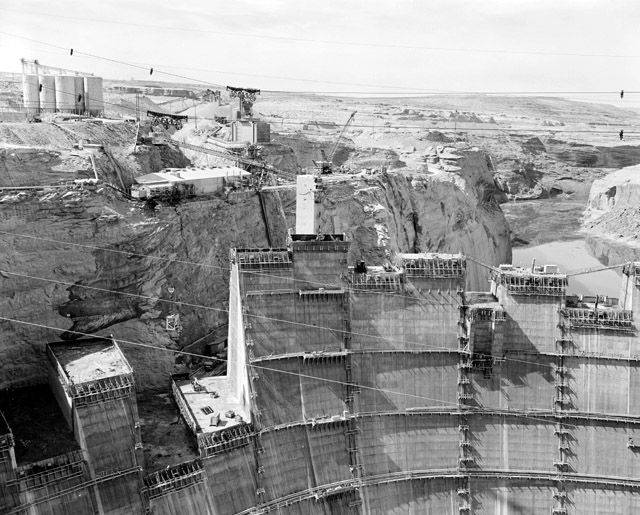
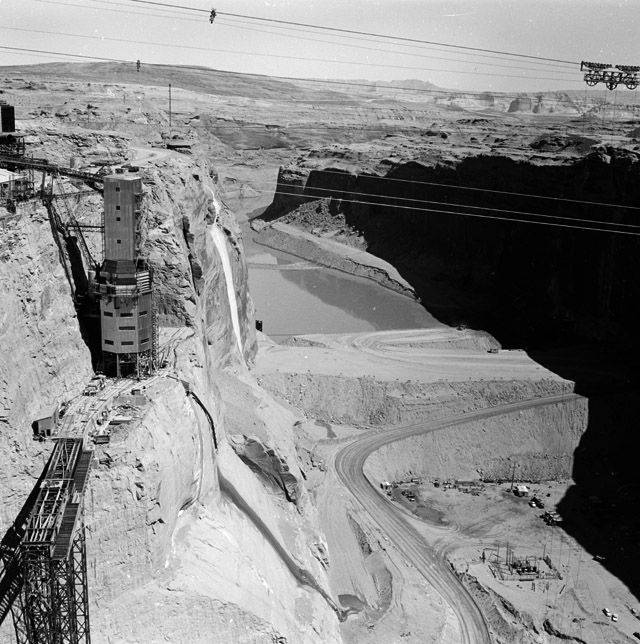
I think about how many of the Wind’s formations – the swooping dunes, spring-fed pools, maidenhair tapestries, snakes, scorpions, frogs, the Diné people themselves – were drowned or displaced by the Glen Canyon Dam and the stagnant, bloated waters of Lake Powell. How many universes have been disrupted, how many lives wrenched out of joint.
A New Climate
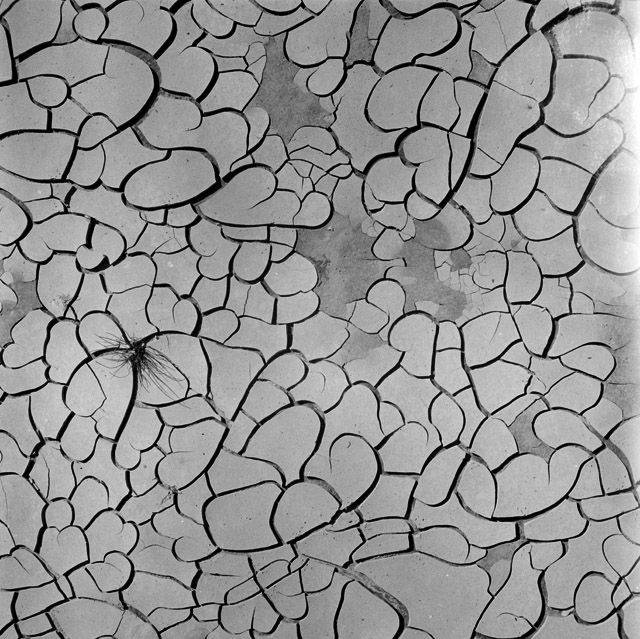
AS WITH THE rest of the globe, a new climate has arrived in Glen Canyon. Temperatures are rising, water supply is falling, demand for water is growing, and Lake Powell is drying up. Data published by the Bureau of Reclamation shows a steady decline in the lake’s water levels beginning in the year 2000, when the lake was nearly full. As of March 2026, the lake is at 23.58% of its total capacity, and many worry that if this trend continues, the lake could eventually disappear altogether. 28
As the lake runs dry, a transformed landscape – and climate – is emerging. Where there was once canyon, river, or lake, there are now deep beds of silt which have been accumulating behind the dam for the last 60 years. And buried in those silt beds are the spoilages of Glen Canyon’s industrial past, waiting to resurface and spew across the basin.
Radium Dust
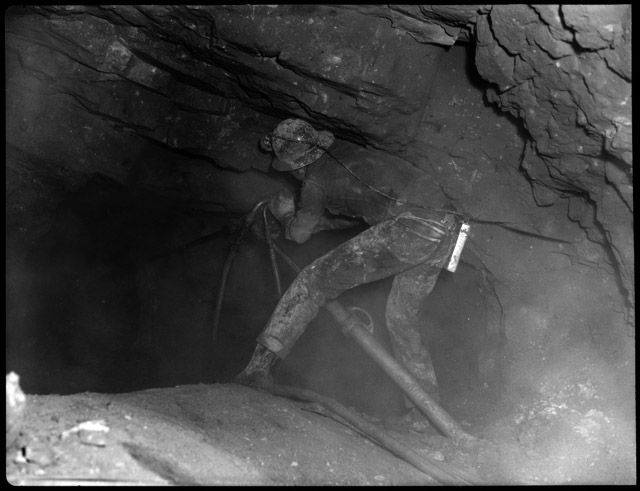
IN 1949, following World War II and the rush for nuclear power, the Vanadium Corporation of America constructed a uranium mill on the banks of Glen Canyon. The mill closed in 1953, but Vanadium left behind 26,000 tons of radioactive tailings in an uncovered heap. When Lake Powell began to fill ten years later, dam managers decided to allow lake waters to back up over Vanadium’s refuse, all of which leached into Lake Powell’s sediment. 29
If and when the lake retreats, radium-infused sediment will become exposed to air, and radioactive dust will blow across the basin. Uranium is bone-seeking, meaning once it gets into the body, it settles in the skeleton and incorporates with the bone’s minerals. Cells decay when they come into contact with radium, causing the body to eventually disintegrate.
Here, sediment becomes not only an archive of the past, but an archive of the future, laced with the deadly potentialities of distant wars and old economies which now threaten to dissolve the bones of people in the future. In this way, sediment also becomes the point around which currents of the past and the future, the planetary and the cellular converge.
Feedback Loops
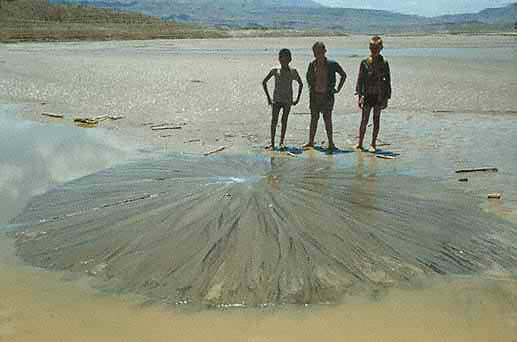
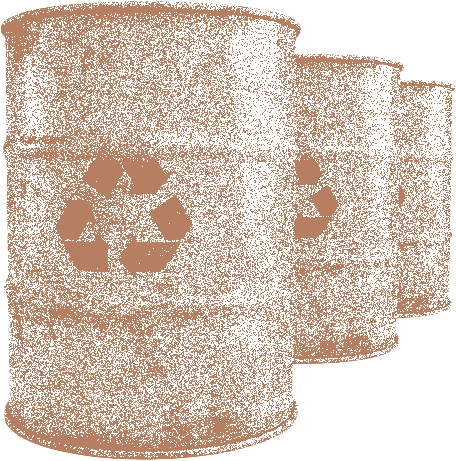
RADIUM IS NOT the only danger lurking in Lake Powell’s sediment. The lake’s silt beds have also become a breeding ground for anaerobic bacteria, which digest organic material cached in the sediment and turn this material into methane. Trapped beneath the pressure of the lake, methane will collect in pockets and fissures in the silt, but as the lake recedes and pressure is released, methane erupts to surface and dissipates into the atmosphere. 30
Methane is 80 times more effective at trapping heat than carbon dioxide and reservoirs – such as Lake Powell – contribute 6%-8% of total human-caused methane emissions. 31
At the same time as the global climate effects Lake Powell, Lake Powell effects the global climate. Scientists call this kind of cycle, in which change amplifies change amplifies change a positive feedback loop. Positive feedback loops draw their components together into an ever-more chaotic and tightly bound spiral. I picture two hurricanes colliding, their arms locking, and turning each other like gears spun out of control until they merge into one superstorm. I think about the echo between a microphone brought too close to a speaker, which gets faster and higher and faster and higher until the two echoes become one high screech.
Thus, the currents of change that flow through Glen Canyon become inextricably entwined with those that flow through the global climate. The motions of the external world collect and settle in Glen Canyon – the shards of distant mountains, the tailings of continental winds, the spillage of colonialism and global wars, the legacies of imperial thought – but in Glen Canyon, these distant remnants get reworked as they come into contact with the canyon’s people, microbes, water, wind, and sediment, and then flung back out to gust across the basin and the planet.
Reemergence
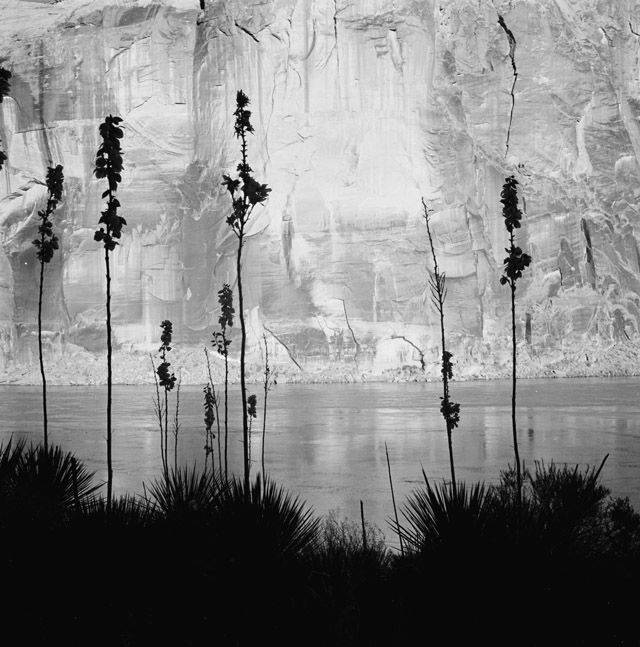
ALONGSIDE GLEN CANYON’S radium beds and methane volcanoes, an ecosystem that is both new and old is emerging. As the reservoir dries up, plants have been quick to take root in the Canyon’s freshly-exposed banks. The first plants to arrive are usually invasive—tumbleweed, cheatgrass, and camelthorn. But a few years after the water recedes, native species, too, return. Scientists have yet to fully explore Glen Canyon’s resurgence, but one biologist declared a recently resurfaced tributary canyon “the most intact native ecosystem I’ve ever seen.” 32
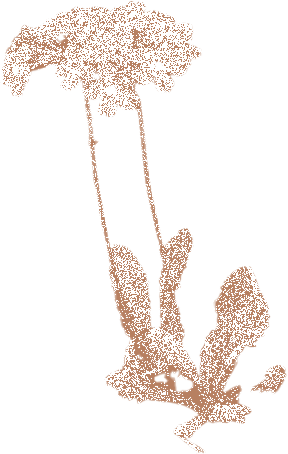
As I read about Glen Canyon’s history, and about the progression of climate change, it is easy to imagine a story of steady, unidirectional degradation, an unrelenting fall towards widespread ruin. But when I learned that Glen Canyon is once again blossoming with coyote willow, paintbrush, hackberry, maidenhair fern, and columbine, I felt, for the first time since I can remember, that perhaps there are other, more vibrant possibilities for the future. I cannot trace a story of uniform decline through a landscape in bloom.
In Glen Canyon, the out-of-control superstorm that is climate change and human recklessness has paradoxically caused time to stutter and reel back on itself. The seemingly unstoppable, forward-hurtling train of anthropogenic domination and inundation has – for a moment, at least – burnt itself to a stop. And as Lake Powell retreats, a landscape is surfacing that insists, in every flowering columbine, in every shifting silt bed, that even amidst ruination, there remain opportunities for rearrangement and regrowth.
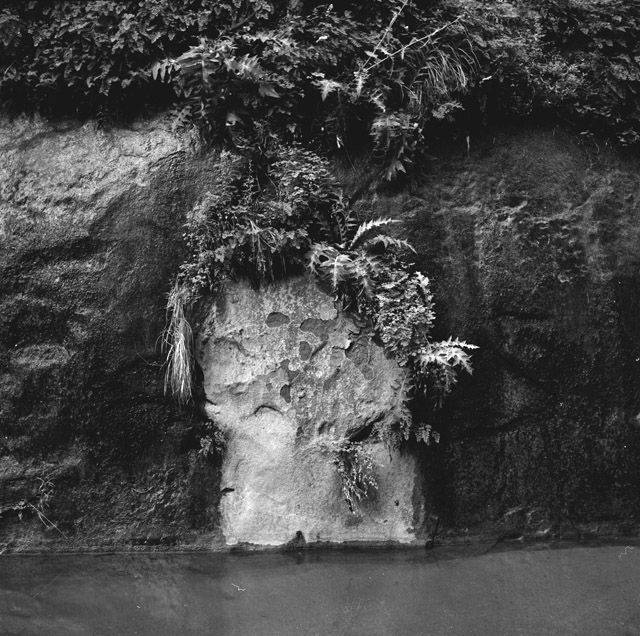
This is a landscape that is neither lost, nor wholly restored: this is a new kind of landscape altogether, rife with incongruities and surprises. Willows and cottonwoods are flourishing among radium beds and silt glaciers. And on some of these radium beds, communities of cryptobiotic microorganisms are already at work rebuilding desert crust, which scientists say could help prevent radioactive dust from blowing up into the air. 33 This strikes me as a wondrous serendipity, that billions of organisms from diverse clades of life – bacteria, algae, fungi, lichens – are amassing to provide a protective shield over a problem that has stumped and worried both environmentalists and land managers for decades.
Then again, this might not be serendipity at all. Diné understand that the Holy Wind níłch’i will eventually remediate human disruptions and restore balance and harmony. However, Diné philosophies predict that this process of reharmonization will be preceded by human suffering and sacrifice, likely brought on by a period of persistent drought and disease. 34
This whorl of time – in which (some) humans are able to inflict unfettered disruption on the world and expect the world not to rise back up in response – seems to be reaching its end. As we all are confronted with new kinds of landscapes, riddled with the relics of past mistakes and teeming with the life that has survived it all, I find myself wanting to lean again towards wonder. Not the kind of wonder that drives acquisition, possession, and eventually loss, but wonder of a different hue: a wonder that drives us, as Isabelle Stengers puts it, “to be surprised and entertain questions.” 35 For now, I am entertaining the questions:
What might I learn from listening to the stories embedded in Glen Canyon’s sediment? What can flowers teach me about resilience? What does the wind have to say about bringing together coalitions? How do the people who have lived in this landscape for hundreds and thousands of years understand it? Can ebbing waters be an example for ceding land back to original inhabitants? What do microorganisms know about remediation? Can humans lead with the same resilience, collaboration, and grace?
Erosions
AS I TRY to map Glen Canyon’s past and future stories, pull together the threads of events that have moved through so many other places, drawn along by so many other actors across so many different times, I think back to the swirled layers of the petrified sandsea. If I am to tell a true story about Glen Canyon, I think it needs to look like this: it needs to be particular – made of a mass of granular stories – and it needs to also follow alongside the vaster currents that carried them there. These stories need to heap, whirl, and mingle, and they must inevitably erode, recirculate, and transform as they are dragged out into other spaces and other times.
Works Cited
-
Tape, Carl. “The Lower Jurassic Navajo Sandstone: large-scale deposition and small-scale structures.” nhmu.utah.edu, 2005. https://nhmu.utah.edu/sites/default/files/trail-resource/Navajo%20Sandstone.pdf. ↩
-
Tape ↩
-
James, Erin. “Narration.” Narrative in the Anthropocene. The Ohio State University Press, 2022, p. 19. https://ohiostatepress.org/books/titles/9780814215074.html ↩
-
Courlander, Harold. The Fourth World of the Hopis: The Epic Story of the Hopi Indians as Preserved in Their Legends and Traditions. University of New Mexico Press, 1987, p. 26. https://www.unmpress.com/9780826310118/the-fourth-world-of-the-hopis/ ↩
-
Mustoe, G. E. “The origin of honeycomb weathering.” Geological Society of America Bulletin, vol. 93, 1982, pp. 108-115 https://doi.org/10.1130/0016-7606(1982)93<108:TOOHW>2.0.CO;2. ↩
-
Cordova, Viola F. “The Concept of Monism in Navajo Thought.” (1992), pp. 70, 100, 92. https://digitalrepository.unm.edu/phil_etds/29. ↩
-
McNeley, James Kale. Holy Wind in Navajo Philosophy. University of Arizona Press, 1981, p.35 https://uapress.arizona.edu/book/holy-wind-in-navajo-philosophy. ↩
-
Nocita, Bruce W. “Pedestal rocks in the Pliocene Puye Formation, New Mexico.” Sedimentary Geology, vol. 49, issues 3-4, October 1986, pp. 193-200. ScienceDirect, accessed 19 October 2025, https://doi.org/10.1016/0037-0738(86)90038-2. ↩
-
Lee, Katie, and Terry Tempest Williams. All My Rivers Are Gone: A Journey of Discovery through Glen Canyon. 1st ed., Johnson Books, 1998. pp. 165-166. ↩
-
Nichols, Tad. River Journal, Colorado River [constructed title], 1956, 1957. p. 24. Colorado Plateau Archives, Colorado Plateau Digital Collections, Northern Arizona University. Cline Library, accessed 19 October 2025, https://archive.library.nau.edu/digital/collection/cpa/id/60150/rec/13 ↩
-
Ogden, Laura A. Loss and Wonder at the World’s End. Duke University Press, 2021, p. 5. https://doi.org/10.1215/9781478021865. ↩
-
Ogden, p. 7 ↩
-
Anderson, Ben. “Affective atmospheres.” Emotion, Space and Society 2 (2), 2009, pp. 79,78. https://doi.org/10.1016/j.emospa.2009.08.005 ↩
-
Ogden, p. 7 ↩
-
Bsumek, Erika Marie. The Foundations of Glen Canyon Dam: Infrastructures of Dispossession on the Colorado Plateau. University of Texas Press, 2023. ↩
-
qtd. in Bsumek, p. 72 ↩
-
Farmer, Jared. Glen Canyon Dammed: Inventing Lake Powell and the Canyon Country. University of Arizona Press, 1999, p. 79. ↩
-
Farmer ↩
-
Farmer, p. 79 ↩
-
United States, National Park Service. “Frequently Asked Questions - Rainbow Bridge National Monument.” National Park Service, 17 Apr. 2025, www.nps.gov/rabr/faqs.htm ↩
-
Podmore, Zak. Life After Dead Pool: Lake Powell’s Last Days and the Rebirth of the Colorado River. Torrey House Press, 2024.https://www.torreyhouse.org/life-after-dead-pool ↩
-
Farmer, p. 35 ↩
-
Bsumek, p. 187 ↩
-
Smith, Jen Rose. Ice Geographies: The Colonial Politics of Race and Indigeneity in the Arctic. Duke University Press, 2025.https://doi.org/10.1215/9781478060758 ↩
-
Curley, Andrew. “Infrastructures as Colonial Beachheads: The Central Arizona Project and the Taking of Navajo Resources.” Environment and Planning D: Society and Space, vol. 39, no. 3, June 2021, pp. 387–404. https://journals-sagepub-com.uidaho.idm.oclc.org/doi/10.1177/0263775821991537 ↩
-
Smith, p. 109 ↩
-
Cordova, p. 106 ↩
-
Bureau of Reclamation. Lake Powell Storage Data. Bureau of Reclamation, 12 October 2025. https://www.usbr.gov/uc/water/hydrodata/reservoir_data/919/dashboard.html#csv/ ↩
-
Thompson, Jonathan. “The 26,000 Tons of Radioactive Waste under Lake Powell” High Country News, 18 December 2017, https://www.hcn.org/articles/pollution-a-26-000-ton-pile-of-radioactive-waste-lies-under-the-waters-and-silt-of-lake-powell/ ↩
-
Mazzini, Adriano, and Giuseppe Etiope. “Mud volcanism: An updated review.” Earth-Science Reviews, vol. 168, May 2017, pp. 81-112. ScienceDirect, accessed 19 October 2025, https://doi.org/10.1016/j.earscirev.2017.03.001 ↩
-
Zaske, Sara, et al. “Methane Emissions from Reservoirs Are Increasing.” WSU Insider, WSU Insider, 19 September 2022, https://news.wsu.edu/news/2022/09/19/methane-emissions-from-reservoirs-are-increasing/ ↩
-
Podmore, p. 25. ↩
-
Podmore, p. 141. ↩
-
Cordova, pp. 102-103 ↩
-
Ogden, p. 13. ↩