American Election Denial: 250 Years of Doubt
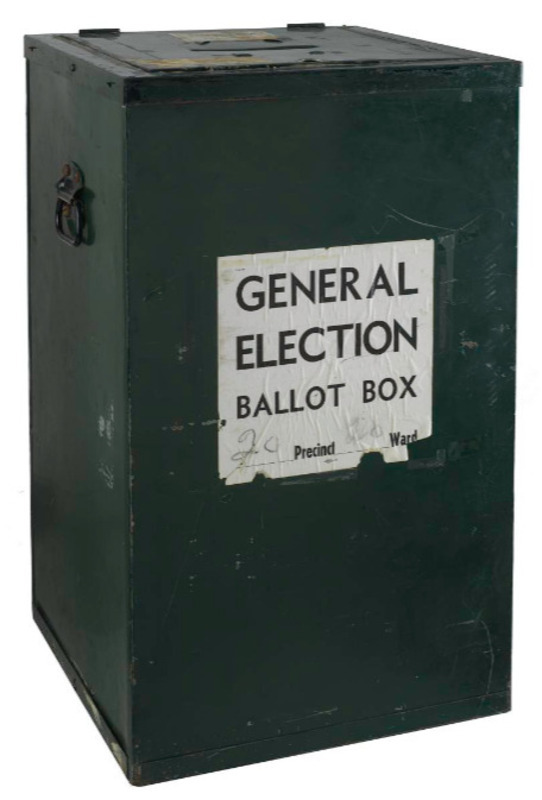
Throughout the history of the United States, presidential elections have been a point of contention and a battleground for the future of the country. In total, the U.S. has held 60 presidential elections1. Of the 60 elections, 9 have been contested in Congress, the courts, or popular media. While the reason for contention varies in each election, one major theme stands out. The supporters of the losing political party are often easily influenced by allegations of election fraud.
But why is it that some Americans cannot accept electoral defeat? While a few presidential elections have been decided through less than ethical means (see 1800, 1824, 1876, and 1888), there is no widespread evidence of rampant fraud or corruption changing the outcome in each election cycle2. The reason lies in the voters’ psyche. As political science literature points out, it is easier for voters to accept that a loss occurred because of a perceived rigged system rather than because of a weak candidate or party platform.
All in all, claims of voter fraud and election denial have been around since the founding
of the U.S. and are not new phenomena. They are caused by an asymmetry in the expectations of electoral winners and losers, and these theories are either quelled or spread by the rhetoric of political elites in the losing party.
Political Science and Election Denial
A tremendous amount of political science literature has been devoted to understanding the perceptions of election integrity among both election winners and losers. The main consensus is that a widespread winner-loser gap exists after any election outcome and influences both sides’ confidence in democracy3.
The winner-loser gap occurs because of “expectancy disconfirmation” on the losing side3. In other words, supporters of the winning candidate or party have their electoral expectations confirmed after their victory3. They thought their candidate would win, and they won. Meanwhile, supporters of the losing side are often left in disbelief3. They had the same belief about their preferred candidate, but now they must deal with the cognitive stress and discomfort of a loss.
But why are both sides so confident about winning? Shouldn’t one side be favored in the polls or have better odds? Despite scenarios in which one candidate has a large lead going into election day, both parties and nominees often express tremendous confidence before the election3. Inevitably, this sets up one group of supporters for an unexpected disappointment.
For the losing side’s supporters, accepting claims of fraud or illegality more easily soothes the discomfort of an electoral loss2. For many partisans, winning an election means the processes were legal and the better side won, while losing means the system is corrupt and the outcome illegitimate4. Additionally, consecutive losses for one side strengthen the belief by the losing supporters that the system is corrupt4. However, consecutive victories for the winning side do not enhance that side’s perceptions of electoral fairness4.
Unfortunately, these thought processes play out among a significant share of the American public. A 2023 study found that a little over 40% of Americans regularly expect that if their preferred politician loses, it will be because of fraud3. Regarding consecutive losses, in 2012, Republicans expressed much lower levels of trust in American elections after losing their second presidential election in a row, compared to after their loss in 20084.
Finally, rhetoric from political elites on the losing side plays a large role in predicting the prevalence of election denial. Politicians can heighten the effect that fraud claims have on levels of electoral trust among supporters2. Specific allegations pushed by party leaders and presidential nominees strongly correlate with increases in fraud beliefs among electoral losers5.
In sum, because of the psychological discomfort of losing, electoral losers are more likely to believe in any claims of fraud, especially those pushed by leaders in their political party.
Presidential Bargains and Undemocratic Outcomes
In the case of 19th century contested elections (1800, 1824 ,1876, 1888), flaws in the U.S. Constitution and electoral practices contributed to legitimate concerns about the outcome. Due to the limitations of the Electoral College, in 1800 and 1824, the House of Representatives voted to decide the next president. These two decisions in the House were heavily plagued by partisanship and backdoor bargaining.
In 1800, Thomas Jefferson agreed to demands made by Federalists in the House to win the presidency over his running mate Aaron Burr 6. In exchange for the victory, he gave up efforts to change the country’s financial system and kept Federalists in place in the executive branch6.
In 1824, the House voted to elect John Quincy Adams as president over Andrew Jackson. Before the decision, Jackson had won 15 more electoral votes than Adams. However, Adams was alleged to have made a deal with Speaker of the House, Henry Clay, in exchange for the presidency7. Immediately after taking office, Adams appointed Clay as Secretary of State7.
In the first widespread accusation of electoral illegitimacy, Andrew Jackson alleged that a “corrupt bargain” had taken place between Adams and Clay8. He and his supporters spread this message throughout Adams’ four years in office.
In 1876, accusations of voter suppression (along with some party tampering with state electors) led to an Electoral Commission deciding the election outcome9. With an 8-7 Republican majority, the Commission awarded the presidency to Republican nominee Rutherford B. Hayes9. Like the events of 1800 and 1824, Hayes was alleged to have made a deal with the opposition party to ensure a peaceful transition of power. The next year, in accordance with Southern Democrats’ demands, Hayes ended Reconstruction, and the South enforced Jim Crow laws for the next 80+ years10.
Moreover, in 1888, widespread election fraud was a common occurrence. Throughout the 1880s, both Republicans and Democrats would siphon campaign money to state parties in order to pay voters for their support at the ballot box11. Unfortunately for the Republican nominee, Benjamin Harrison, a top Republican official was caught sending a letter with detailed instructions about vote-buying schemes to state officials11. The letter instructed campaign staff to “divide the floaters into blocks of five and put a trusted man with necessary funds in charge of these five, and make him responsible that none get away and that all vote our ticket”.12 Harrison ended up winning the election, despite the allegations of pay-to-vote schemes.
In each of these instances, supporters of the losing side (Burr in 1800, Jackson in 1824, Tilden in 1876, and Cleveland in 1888) had legitimate reasons for complaining about the processes that led to their loss. The backroom bargaining to decide three of these contests provides evidence of a system that did not produce a president in a truly democratic fashion. Additionally, the blatant corruption of the 1888 election also lends credence to complaints by Cleveland supporters.
Modern American Election Denial
In the remaining contested elections (1916, 1960, 2000, 2016, and 2020), the evidence of fraud, corruption, and other illegalities was more suspect and thus the public’s belief about the outcome depended upon the rhetoric of the losing party’s elites. In four out of these five elections, the losing presidential candidate dismissed any allegations of fraudulent practices.
After the 1916 election was decided by a tight margin in California, Republican nominee Charles Hughes decided not the challenge the outcome13. Officials in the Republican Party urged him to contest the results, but Hughes conceded to President Wilson13. Similarly, in 1960, Nixon lost in a close race to Kennedy. The outcomes of Illinois and Texas gave Kennedy a slight edge and the presidency. Despite his party clamoring for him to contest the results and request recounts, Nixon conceded to Kennedy and dismissed any rumors of fraud14. Finally, conclusive evidence showed that the Russian government interfered with the 2016 presidential campaign of Hillary Clinton and disseminated election misinformation on social media15. Clinton, however, did not contest the 2016 results and conceded on election night.
While the discussion of the 2000 election differs slightly, Al Gore did not push any claims of election fraud on the public. Even though Gore did first exhaust every legal avenue to change the outcome in Florida, he eventually conceded the race to Bush after the Supreme Court ruled in Bush’s favor16. Many argue that issues with the Florida ballots presented a legitimate legal question for Gore to litigate. The ballots confused some voters and were difficult for vote tabulating machines to count16. Ultimately, Gore used legal options to influence the outcome and conceded when he lost in court.
On the other side, President Trump used both legal and illegal means to try to overturn the 2020 election5. His actions, and statements regarding widespread election fraud, had a profound impact on the American public5. Trump and prominent Republican officials utilized misinformation and propaganda to influence a significant portion of the Republican Party into believing that Joe Biden was an illegitimate president2.
Trump’s example shows how the winner-loser gap is expanded via political elite rhetoric. By refusing to concede, and spreading blatantly false election claims, Trump capitalized on the dissatisfaction of his base with the 2020 electoral outcome5. Despite no conclusive evidence and over 60 failed lawsuits, one prominent politician and his enablers were able to convince about 1/3 of U.S. adults that a U.S. President was illegitimately elected17.
Conclusion
Claims of a rigged system are not a uniquely political phenomenon. Think about your favorite sports team for a moment. Have you ever questioned whether a referee was biased against your team during a crucial game? Did the league officials conspire to prevent a certain outcome?
Claims of illegitimacy surround us in sports, in life, and especially in politics. Consider the following statements that are heard all too often.
“Did Republicans win the last election? There must be voter suppression at play. I can’t believe anyone would vote for them.”
“Did Democrats win? That has to be because of voter fraud. No one I know voted for them.”
We do not and should not have to think this way.
As we head into the nation’s 250th birthday in 2026, Americans should be wary of falling for party leaders’ messaging about corrupt election practices. When faced with theories about election fraud, the public should question the intentions and amount of evidence behind political elites’ allegations. Fortunately, some electoral losers, like Hughes in 1916, quickly suppressed claims of fraud. However, in the future, others may be inclined to promote these claims and attempt to overturn a legal election.
Regardless of party affiliation, citizens have a duty to seek out the truth. To preserve democracy, Americans must stand up for legitimate election results. Whether our party wins or loses, everyone loses when we can’t respect the votes of our peers.
With the midterm elections approaching in 2026, and the next presidential election in 2028, we all should be aware of our political blind spots. Politicians know how to take advantage of them, and if we are not careful, election denial may become the new norm instead of a small and inconsistent blip in American history.
The unfortunate truth is, many of us are vulnerable to certain types of messaging, simply due to the uncomfortable feeling of losing.
Credits
Jacob Bindley, a University of Idaho Political Science Student, created this exhibit in Fall 2025 to highlight a distinct piece of presidential history relating to the upcoming 250th anniversary of the founding of the United States–contributing to the conversations around America 250.
The project was made possible through the Department of History’s 4980 Leadership Internship, led by Dr. Rebecca Scofield and Professor Mario Pile. The digital exhibit was developed with support from Evan Peter Williamson from the Center for Digital Inquiry and Learning at the University of Idaho Library.
References
-
The American Presidency Project. (n.d.). Election Listing | The American Presidency Project. www.presidency.ucsb.edu. https://www.presidency.ucsb.edu/statistics/elections ↩
-
Enders, A., Uscinski, J., Klofstad, C., Premaratne, K., Seelig, M., Wuchty, S., Murthi, M., & Funchion, J. (2021). The 2020 presidential election and beliefs about fraud: Continuity or change? Electoral Studies, 72, 102366. https://doi.org/10.1016/j.electstud.2021.102366 ↩ ↩2 ↩3 ↩4
-
Mongrain, P. (2023). Suspicious Minds: Unexpected Election Outcomes, Perceived Electoral Integrity and Satisfaction With Democracy in American Presidential Elections. Political Research Quarterly, 76(4), 1589-1603. https://doi.org/10.1177/10659129231166679 ↩ ↩2 ↩3 ↩4 ↩5 ↩6
-
Daniller, A., Mutz, D. (2019). The Dynamics of Electoral Integrity: A Three-Election Panel Study, Public Opinion Quarterly, 83(1), 46–67, https://doi.org/10.1093/poq/nfz002 ↩ ↩2 ↩3 ↩4
-
Bowler, S., & Donovan, T. (2023). Confidence in US Elections After the Big Lie. Political Research Quarterly, 77(1), 283-296. https://doi.org/10.1177/10659129231206179 ↩ ↩2 ↩3 ↩4
-
Ferling, J. (2004, November). Thomas Jefferson, Aaron Burr and the Election of 1800. Smithsonian; Smithsonian.com. https://www.smithsonianmag.com/history/thomas-jefferson-aaron-burr-and-the-election-of-1800-131082359/ ↩ ↩2
-
EBSCO. (2022). Presidential Elections of 1824 Deadlocked | Research Starters | EBSCO Research. https://www.ebsco.com/research-starters/history/presidential-elections-1824-deadlocked#full-article ↩ ↩2
-
Kratz, J. (2020, October 22). The 1824 Presidential Election and the “Corrupt Bargain.” National Archives: Pieces of History. https://prologue.blogs.archives.gov/2020/10/22/the-1824-presidential-election-and-the-corrupt-bargain/ ↩
-
Blackford, S. (2020, September 30). Disputed Election of 1876 | Miller Center. Millercenter.org. https://millercenter.org/the-presidency/educational-resources/disputed-election-1876 ↩ ↩2
-
Woodward, C. V. (1991). Reunion and Reaction: The Compromise of 1877 and the End of Reconstruction. Oxford University Press. https://doi.org/10.1093/oso/9780195064230.001.0001 ↩
-
Baumgardner, J. L. (1984). The 1888 Presidential Election: How Corrupt? Presidential Studies Quarterly, 14(3), 416–427. http://www.jstor.org/stable/27550102 ↩ ↩2
-
(1888, November 1). St. Paul Daily Globe. Retrieved from the Library of Congress, https://www.loc.gov/item/sn90059522/1888-11-01/ed-1/. ↩
-
(1916, November 15). The Freedonia Censor. Retrieved from NYS Historic Newspapers, https://www.nyshistoricnewspapers.org/?a=d&d=fredc19161115-01.1.2&e=-------en-20--1--txt-txIN---------- ↩ ↩2
-
Kallina Jr., E.F. (2010). Kennedy v. Nixon: The Presidential Election of 1960. Gainesville: University Press of Florida. https://muse-jhu-edu.uidaho.idm.oclc.org/book/17498. ↩
-
Mueller, R. S., & United States. Department of Justice. Special Counsel’s Office. (2019). Report on the investigation into Russian interference in the 2016 presidential election: submitted pursuant to 28 C.F.R. §600.8(c) ([Redacted version].). U.S. Department of Justice. https://permanent.fdlp.gov/gpo119472/report.pdf ↩
-
Elving, R. (2018, November 12). The Florida Recount Of 2000: A Nightmare That Goes On Haunting. NPR.org. https://www.npr.org/2018/11/12/666812854/the-florida-recount-of-2000-a-nightmare-that-goes-on-haunting ↩ ↩2
-
Fortinsky, S. (2024, January 2). One-third of adults in new poll say Biden’s election was illegitimate. The Hill. https://thehill.com/homenews/campaign/4384619-one-third-of-americans-say-biden-election-illegitimate/ ↩