1824:
John Quincy Adams v Jackson
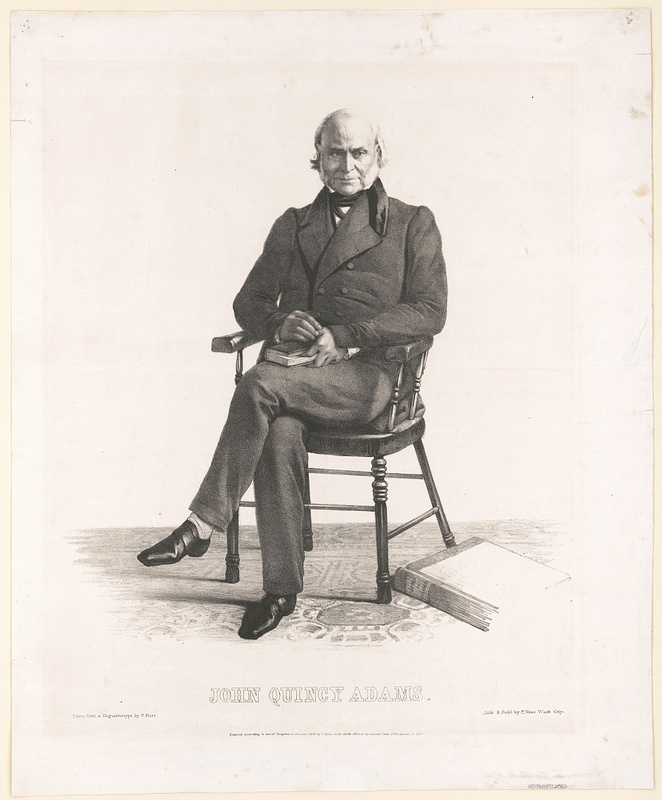
1824 Election
The election of 1824 remains one of the most unusual in American politics. In a race to succeed President James Monroe, four candidates emerged from the Democratic-Republican Party1. The opposing Federalist Party, then almost non-existent, did not field a presidential candidate in the race2.
The four candidates, John Quincy Adams, Andrew Jackson, Henry Clay, and William Crawford, each carved up the electoral map. Jackson and Clay split the western states; Adams won the Northeast, and Crawford took two coastal states3. The final tally of electoral votes: Jackson 99, Adams 84, Crawford 41, and Clay 373. While Jackson won a plurality of electoral votes and the popular vote, he did not win the presidency.
Due to Jackson not winning a majority of the electoral votes, only receiving 99 out of the required 131, the election was decided in the House of Representatives as outlined in the Constitution4.
Speaker Clay Swings the House Vote
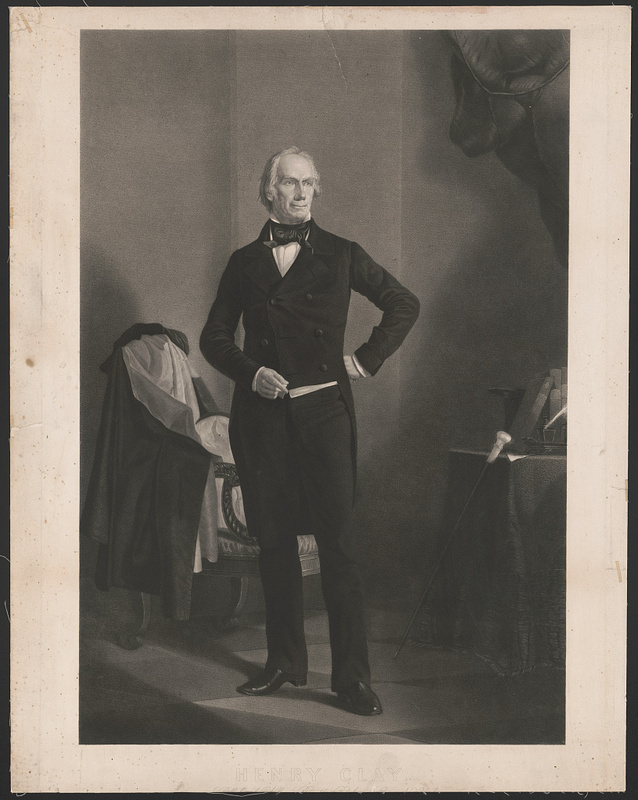
With his 4th place finish in the election, Henry Clay was eliminated from contention before the House of Representatives vote2. The 12th Amendment, passed after the controversy of the 1800 election, narrowed the candidates in the House down to the top 3. However, Clay was also Speaker of the House at the time, holding considerable power over the proceedings5.
Prior to the vote, each presidential candidate attempted to sway Clay and fellow congressmen, like the efforts of Adams and Jefferson in the 1800 election6. Despite the candidates’ efforts to persuade other members, Clay played the kingmaker in the House2.
Ultimately, Clay campaigned in the House for Adams due to his dislike of Jackson’s popularity in the West, a region where Clay maintained political power6. On the first ballot, Adams won 13 out of 24 state delegations and secured the presidency5.
The Corrupt Bargain
Following the election of John Quincy Adams, Henry Clay was appointed Secretary of State in his administration6. At the time, the position of Secretary of State was the most coveted cabinet position, seen as a stepping stone to the presidency2. As Clay had just run for president, a role as Secretary of State would be invaluable to jumpstart his next presidential campaign2.
Jackson and his supporters saw the election as illegitimate. In their eyes, the presidency had been stolen from the people’s choice in Jackson and given away through a “corrupt bargain”.5 As Jackson wrote in a letter following the result:
“I am informed this day by Colo. R. M. Johnston of the Senate that Mr. Clay has been offerred the office of Sec of State, and that he will accept it. So you see the Judas of the West has closed the contract and will receive the thirty pieces of silver. His end will be the same. Was there ever witnessed such a bare faced corruption in any country before?” 7
Jackson issued public statements alleging the “corrupt bargain”. Newspapers around the country followed up with stories of the allegations. Just a few days after the decision by the House of Representatives, the Delaware Gazette wrote:
“On the head of Henry Clay will rest the curses of the country… Where will he hide his contemptible head?” 8
Ultimately, the corrupt bargain fueled Jackson’s successful presidential run in 1828 and haunted Henry Clay’s presidential ambitions.2 Jackson and his campaign used the allegations in their rematch against Adams in 1828, finally winning the presidency. Jackson served two terms in office, while Henry Clay lost to Jackson in the 1832 election and to James K. Polk in 1844.
References
-
Robertson, A. W. (2010). ELECTION OF 1824. In Encyclopedia of U.S. Political History (pp. 700–701). CQ Press. https://doi.org/10.4135/9781608712380.n147 ↩
-
Callahan, D. P. (2022). The politics of Corruption: The Election of 1824 and the Making of Presidents in Jacksonian America. University of Virginia Press. ↩ ↩2 ↩3 ↩4 ↩5 ↩6
-
National Archives. (2019, November 5). 1824 Electoral College Results. https://www.archives.gov/electoral-college/1824 ↩ ↩2
-
U.S. Const. art. 2, § 1. ↩
-
Kratz, J. (2020, October 22). The 1824 Presidential Election and the “Corrupt Bargain.” National Archives: Pieces of History. https://prologue.blogs.archives.gov/2020/10/22/the-1824-presidential-election-and-the-corrupt-bargain/ ↩ ↩2 ↩3
-
EBSCO. (2022). Presidential Elections of 1824 Deadlocked | Research Starters | EBSCO Research. https://www.ebsco.com/research-starters/history/presidential-elections-1824-deadlocked#full-article ↩ ↩2 ↩3
-
Andrew Jackson to William Berkeley Lewis (1825, February 14). The Library of Congress. https://www.loc.gov/resource/maj.06160_0233_0233/?st=text ↩
-
(1825, February 15) American Watchman and Delaware Advertiser. Retrieved from the Library of Congress, https://www.loc.gov/item/sn82014894/1825-02-15/ed-1/. ↩